Does the author believe in animal life on the moon?
کیا مصنف چاند پر حیوانات کے وجود کا قائل ہے؟
The claim
The author uses the idea of animal life on the moon to support his argument, so it must be his personal belief. He is endorsing a false scientific claim as part of his theology.
The short answer
No. In Ruhani Khazain Vol. 2, p. 278, he explicitly attributes the idea to “the philosophy of this age” and uses it as an ilzami argument, binding rationalist opponents with their own premise in defence of the Quranic miracle of the splitting of the moon.
مصنف نے چاند پر حیوانات کے وجود کو اپنا عقیدہ نہیں کہا۔ انہوں نے اسے اپنے زمانے کی فلسفی رائے کے طور پر بیان کیا تاکہ عقل پرستوں پر الزامی حجت قائم کی جا سکے۔
The original pages
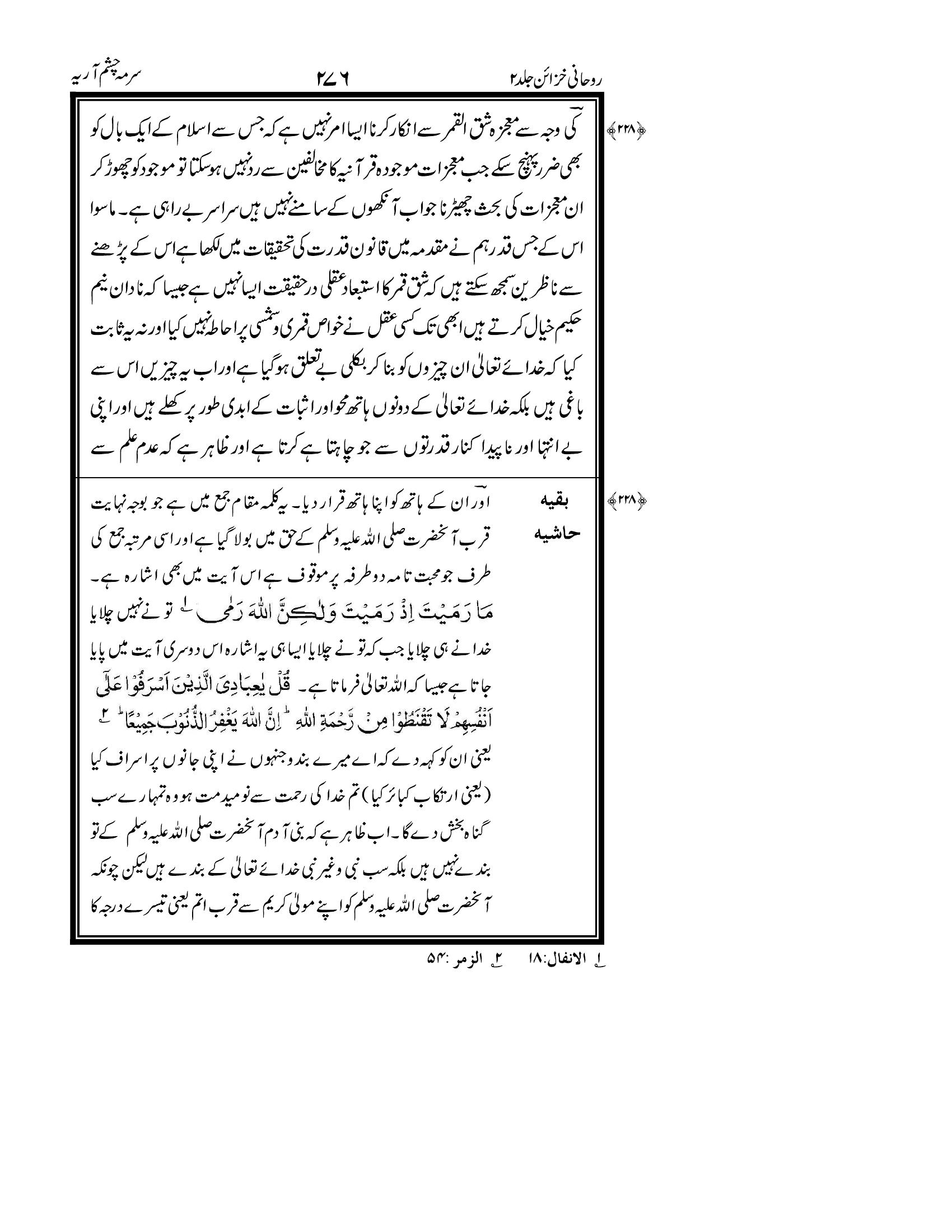
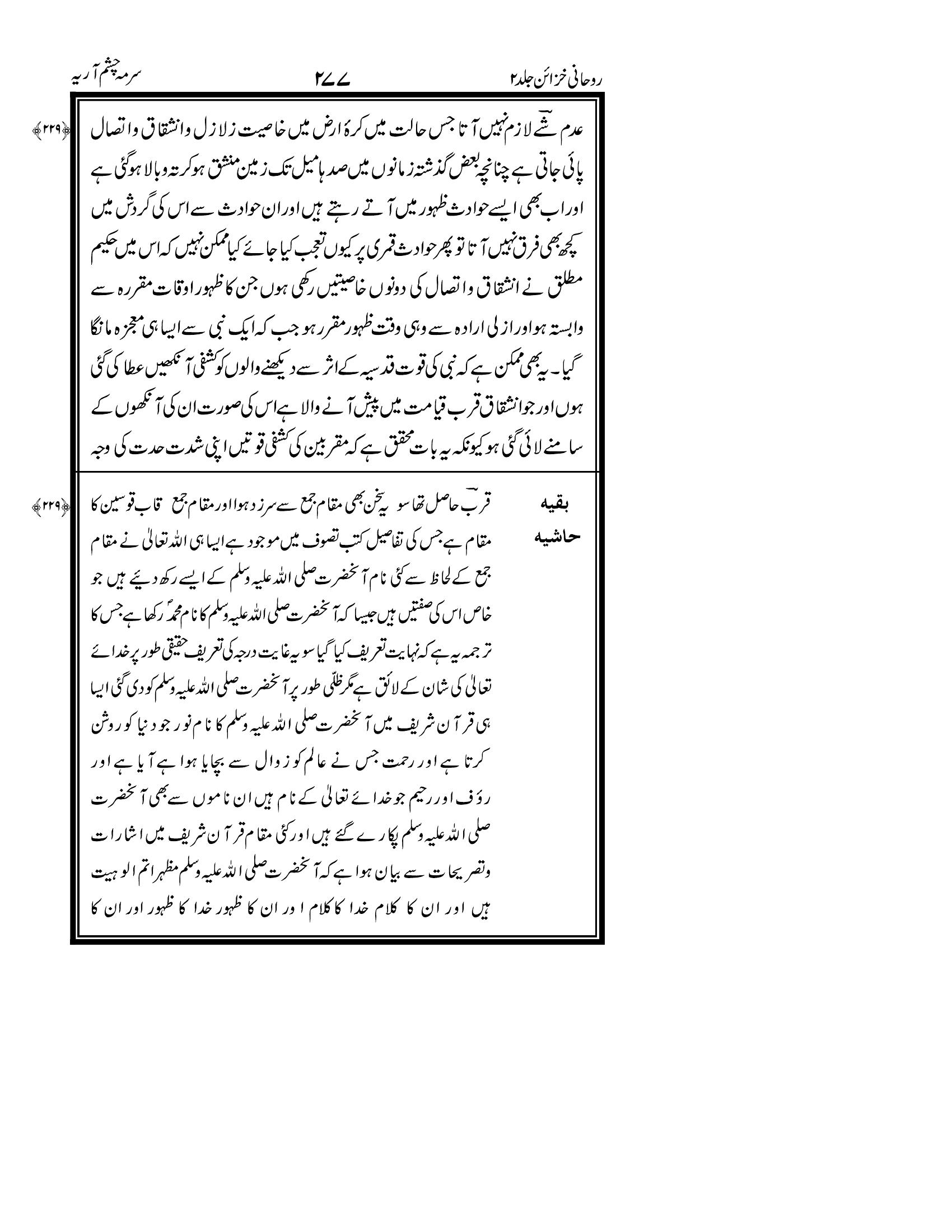
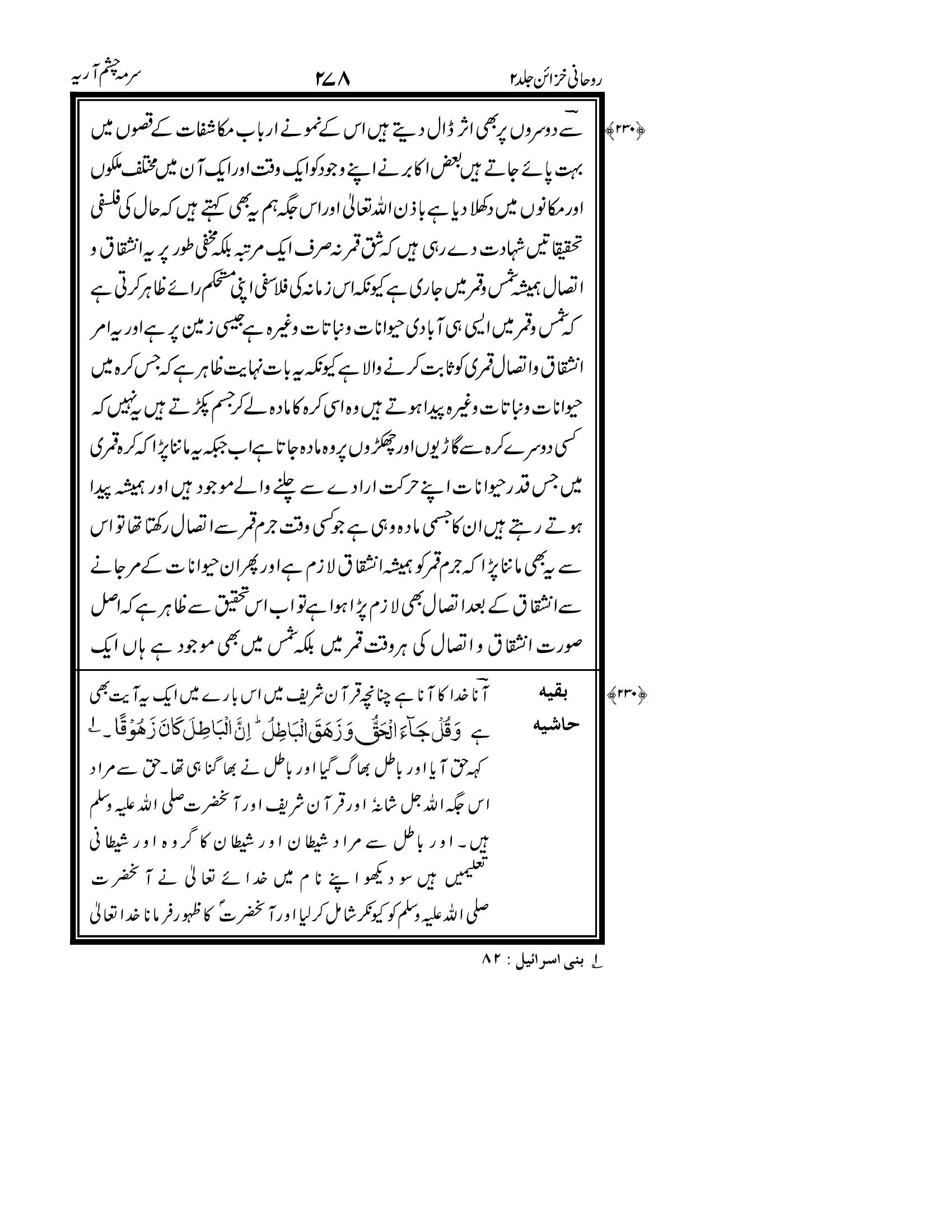
What page 278 actually says
اور اس جگہ ہم یہ بھی کہتے ہیں کہ حال کی فلسفی تحقیقاتیں شہادت دے رہی ہیں کہ شق قمر نہ صرف ایک مرتبہ بلکہ مخفی طور پر یہ انشقاق و اتصال ہمیشہ شمس وقمر میں جاری ہے کیونکہ اس زمانہ کی فلاسفی اپنی مستحکم رائے ظاہر کرتی ہے کہ شمس وقمر میں ایسی ہی آبادی حیوانات ونباتات وغیرہ ہے جیسی زمین پر ہے اور یہ امر انشقاق واتصال قمری کو ثابت کرنے والا ہے کیونکہ یہ بات نہایت ظاہر ہے کہ جس کرہ میں حیوانات ونباتات وغیرہ پیدا ہوتے ہیں وہ اسی کرہ کا مادہ لے کر جسم پکڑتے ہیں یہ نہیں کہ کسی دوسرے کرہ سے گاڑیوں اور چھکڑوں پر وہ مادہ جاتا ہے اب جبکہ یہ ماننا پڑا کہ کرہ قمری میں جس قدر حیوانات اپنے حرکت ارادے سے چلنے والے موجود ہیں اور ہمیشہ پیدا ہوتے رہتے ہیں ان کا جسمی مادہ وہی ہے جو کسی وقت جرم قمر سے اتصال رکھتا تھا تو اس سے یہ بھی ماننا پڑا کہ جرم قمر کو ہمیشہ انشقاق لازم ہے
In English:
And at this point we also say that the philosophical research of the present day bears witness that the splitting of the moon did not happen only once. Rather, in a hidden way, this splitting and joining is always going on in the sun and the moon, because the philosophy of this age expresses its firm opinion that the sun and moon have a population of animals, plants and so on, just as the earth does. And this proves the splitting and joining of the moon, because it is plain that whatever sphere animals and plants are born in, they take their bodies from the matter of that same sphere; the matter is not carted over from some other sphere. So once it has to be accepted that all the creatures living and being born on the moon have bodies made of matter that was once joined to the moon itself, it must also be accepted that the moon is always splitting.
Why the claim fails
The key phrase is اس زمانہ کی فلاسفی اپنی مستحکم رائے ظاہر کرتی ہے, “the philosophy of this age expresses its firm opinion.” This is plain attribution. The author is reporting what the philosophers and scientists of his era held, not stating his own position.
The second marked phrase, یہ ماننا پڑا, “it has to be accepted,” makes the structure even clearer. The argument runs: if you accept your own philosophy's view of the moon, then you must also accept that the moon is always splitting. That is a conditional built on the opponent's premise.
This technique is called ilzami argument in classical Islamic rhetoric: binding an opponent with premises they already accept. The point is: you accept far more extraordinary speculation about the moon, yet reject a Quranic miracle, which is inconsistent on your own terms.
It works the same way as a lawyer arguing ex concessis, from what the other side has already conceded. It doesn't require the lawyer to believe the conceded point. Read as a whole, pages 276–284 are entirely about defending the miracle of Shaq al-Qamar (the splitting of the moon) against rationalist opponents. The reference to life on the moon is one supporting point borrowed from the opponents' own worldview.
Those who call this his personal belief have read a summary stripped of its argument, not the passage itself.
Was this really the scientific opinion of the time?
Yes. Belief in life on the moon was not fringe speculation in the 19th century. It was held by some of the leading minds of the age.
- William Herschel (1738–1822), the astronomer who discovered Uranus, regarded the planets and moons as inhabited and believed his telescopes showed signs of vegetation and structures on the moon. His writings show that belief in many inhabited worlds at times drove his observations.
- Thomas Dick (1838), a popular writer on Christianity, philosophy and astronomy, wrote that the moon was inhabited by rational beings and covered with vegetation.
- Adam Clarke, the Biblical scholar, wrote that there was scarcely any doubt left in the philosophical world that the moon was a habitable globe.
- The Young Astronomer (1846), a school textbook, taught that astronomers generally believed the moon was inhabited.
The historian Michael J. Crowe has documented how widespread belief in many inhabited worlds, including the moon, was among scientific and religious thinkers of the 18th and 19th centuries.
So when the author wrote that “the philosophy of this age expresses its firm opinion” about life on the moon and sun, he was describing the scientific consensus of his time accurately. That further confirms he was citing an outside position, not making a theological claim of his own.
A note on the author's awareness
Writing in 19th-century India, the author was clearly familiar with the European scientific and philosophical debate about life on other worlds. He engaged his rationalist opponents with their own sources, accurately and deliberately. Far from being an embarrassment, the passage shows his command of the debate, which makes the misreading of it harder to excuse.
Sources
- Ruhani Khazain, Vol. 2 (Surma Chashm-e-Arya), pp. 276–278
- William Herschel and the Moon, Springer (peer-reviewed)
- Life on Other Worlds, Library of Congress
- Michael J. Crowe, The Extraterrestrial Life Debate 1750–1900