Did Hadhrat Mirza Ghulam Ahmad (as) call Muslims “children of adulterers”?
کیا مسلمانوں کو «ذریۃ البغایا» کہا گیا؟
The claim
In Aina-e-Kamalat-e-Islam he says every Muslim accepts him except dhurriyyat al-baghaya, “the children of adulterers.” So he called every Muslim who rejects him illegitimate.
The short answer
No. The passage is about his debates with Hindu and Christian opponents of Islam, and the people it leaves out are described as those “upon whose hearts Allah has set a seal,” the Quran's words for those who reject the truth. Baghaya comes from baghy, rebellion, and he himself translated the same expression as “rebellious.”
Read the full answerHide the full answerClick to see the original book pages and sources (6 min read)
The claim rests on one phrase, dhurriyyat al-baghaya, in the Arabic section of Aina-e-Kamalat-e-Islam. Read in context, it says something very different from what critics claim. Six points settle it, drawn from the detailed research by Ahmadi Answers.
1. Read the whole sentence
Here are the original pages:
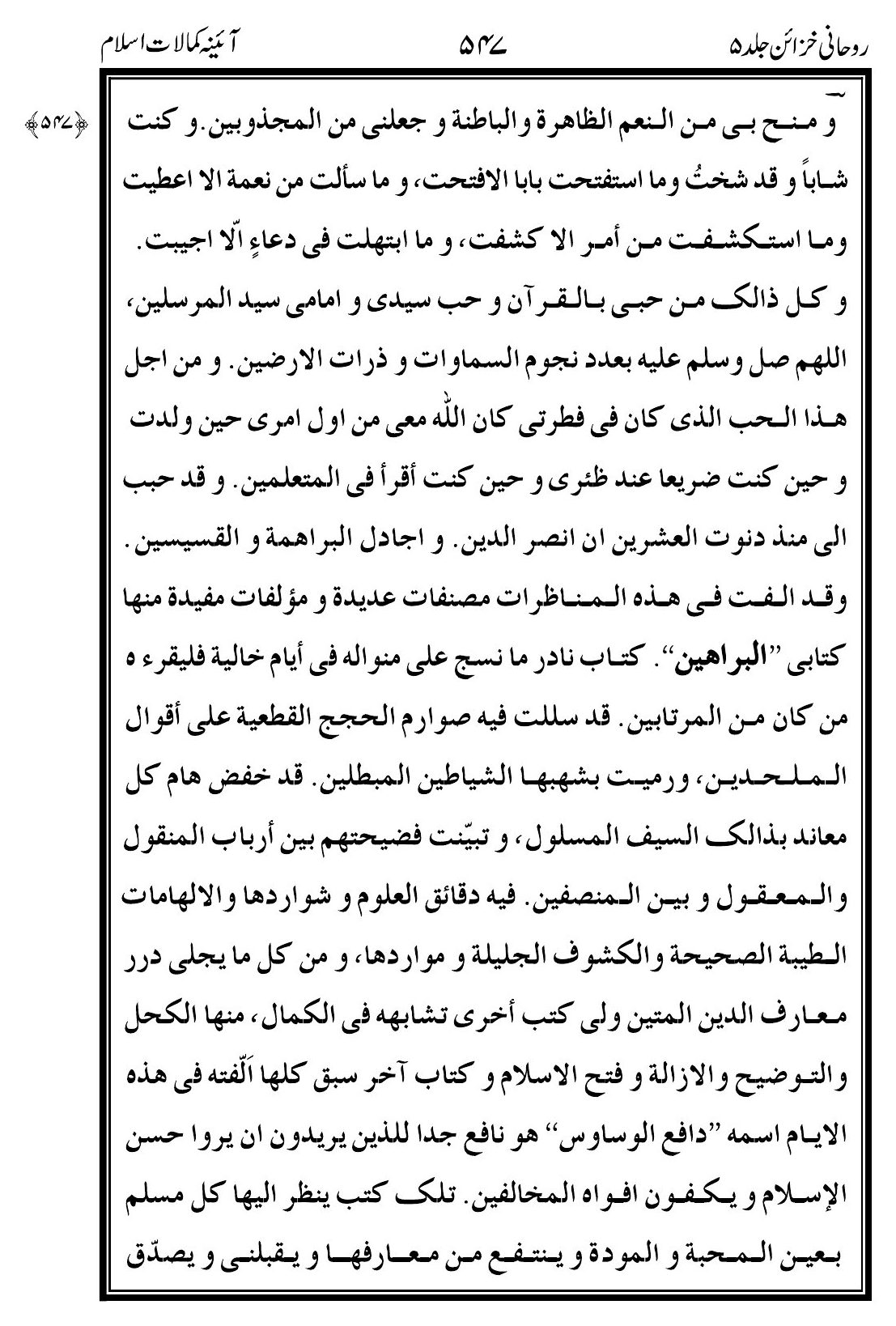
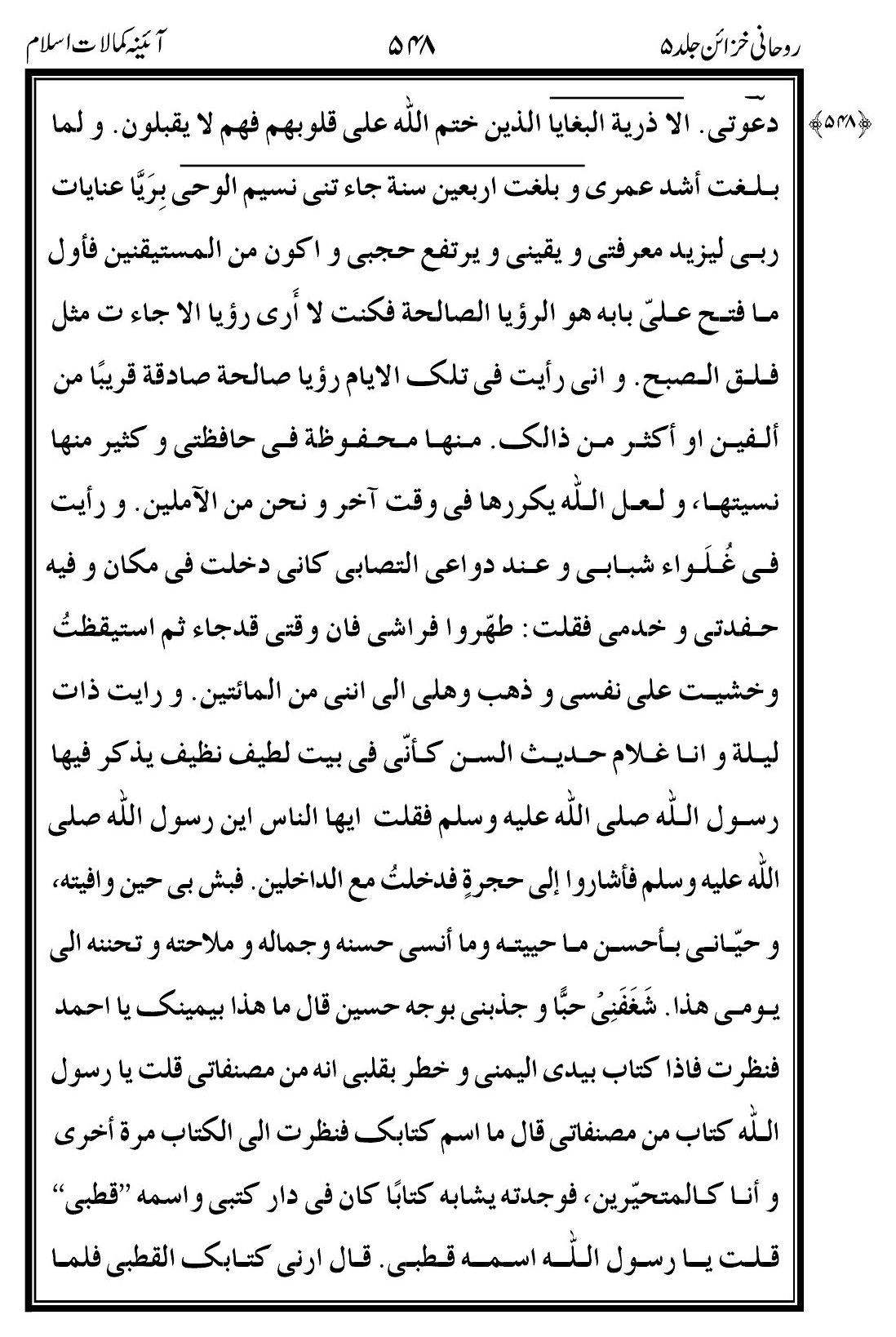
The passage is about his books of debate. He writes that since the age of twenty he has loved to help the faith and “to debate the Brahmins and the priests,” and that in Barahin-e-Ahmadiyya he drew “the swords of decisive proofs against the sayings of the heretics.” He lists his other books, the last of them useful for those who want “to see the beauty of Islam and to silence the mouths of the opponents.” Then comes the sentence:
تلك كتب ينظر اليها كل مسلم بعين المحبة والمودة وينتفع من معارفها ويقبلني ويصدّق دعوتي. الا ذرية البغايا الذين ختم الله على قلوبهم فهم لا يقبلون.
These are books that every Muslim looks upon with love and affection, benefits from their insights, accepts me and affirms my call. Except the dhurriyyat al-baghaya, upon whose hearts Allah has set a seal, so they do not accept.
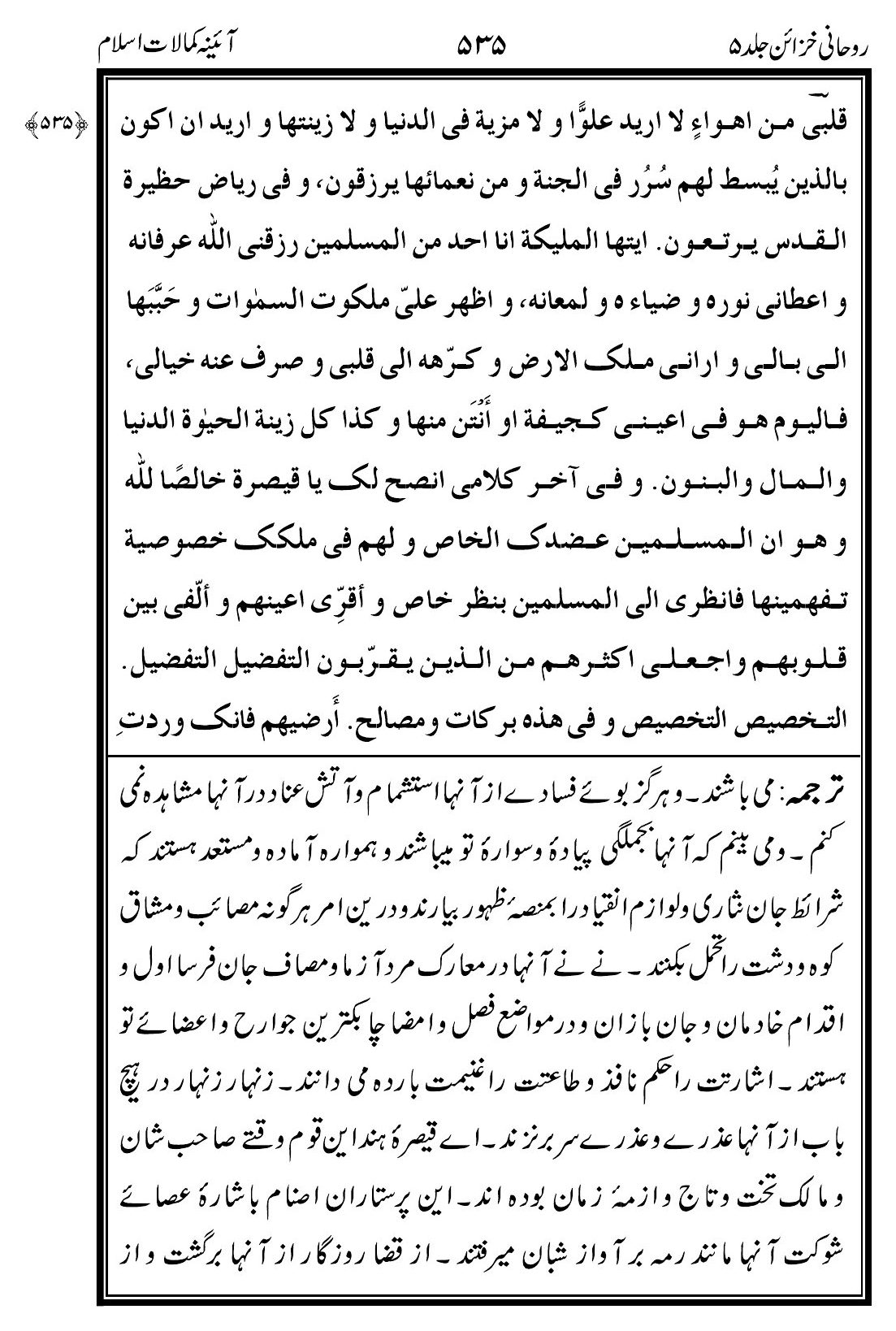
Muslims in this sentence are the ones who welcome his books. And twelve pages earlier (p. 535), writing to Queen Victoria, he tells her that “the Muslims are your special support” and asks her to treat them with special favour. He was not insulting Muslims a few pages later.
2. Who is left out? The Quran answers
Critics read “except” as cutting a group out of the Muslims. But the sentence names the people it leaves out: those “upon whose hearts Allah has set a seal.” That is how the Quran describes those who reject the truth:
إِنَّ الَّذِينَ كَفَرُوا سَوَاءٌ عَلَيْهِمْ أَأَنذَرْتَهُمْ أَمْ لَمْ تُنذِرْهُمْ لَا يُؤْمِنُونَ خَتَمَ اللَّهُ عَلَىٰ قُلُوبِهِمْ
As for those who disbelieve, it is the same to them whether you warn them or not; they will not believe. Allah has set a seal on their hearts…
In Arabic, “except” can name someone who was never part of the group. The best-known example is in the Quran itself:
وَإِذْ قُلْنَا لِلْمَلَائِكَةِ اسْجُدُوا لِآدَمَ فَسَجَدُوا إِلَّا إِبْلِيسَ كَانَ مِنَ الْجِنِّ
And when We said to the angels, “Prostrate before Adam,” they prostrated, except Iblis. He was one of the jinn.
Iblis is “excepted” from the angels, yet he was never an angel. The same reading fits here: Muslims welcome these books; the ones who refuse are the sealed-hearted opponents of Islam that the whole passage is about.
3. Baghy means rebellion, not adultery
Baghaya comes from the root baghy. The classical dictionary Taj al-Arus defines al-baghy as the opposite of ar-rushd, right guidance. The Quran uses the word the same way:
إِنَّ اللَّهَ يَأْمُرُ بِالْعَدْلِ وَالْإِحْسَانِ وَإِيتَاءِ ذِي الْقُرْبَىٰ وَيَنْهَىٰ عَنِ الْفَحْشَاءِ وَالْمُنكَرِ وَالْبَغْيِ
Allah commands justice, kindness, and giving to relatives, and forbids indecency, wrongdoing and transgression (al-baghy).
This verse is recited in Friday sermons around the world, and no one translates al-baghy in it as “adultery.” Indecency (al-fahsha) is already named separately in the same list. See also 10:23 and 42:27, where baghy means rebellion and excess.
4. He translated the expression himself
In a poem against one of his opponents, he used the same expression, ibn baghaa:
آذَيتَنى خبثًا فلَسْتُ بصادق إنْ لم تَمُتْ بالخزي يا ابنَ بغاءِ
…O rebellious man!
His own rendering is “rebellious man,” not “son of an adulteress.” The author's own translation outranks any critic's.
Arabic regularly uses “son of” or “father of” to describe a quality, not a family tree. The Quran calls a traveller ibn as-sabil, “son of the road” (2:177). Abu Jahl means “father of ignorance.” “Offspring of rebellion” describes people defined by their rebellion.
5. Why such strong words? He explained it himself
Five years later, in Kitab-ul-Bariyyah, he addressed his harsh language directly:
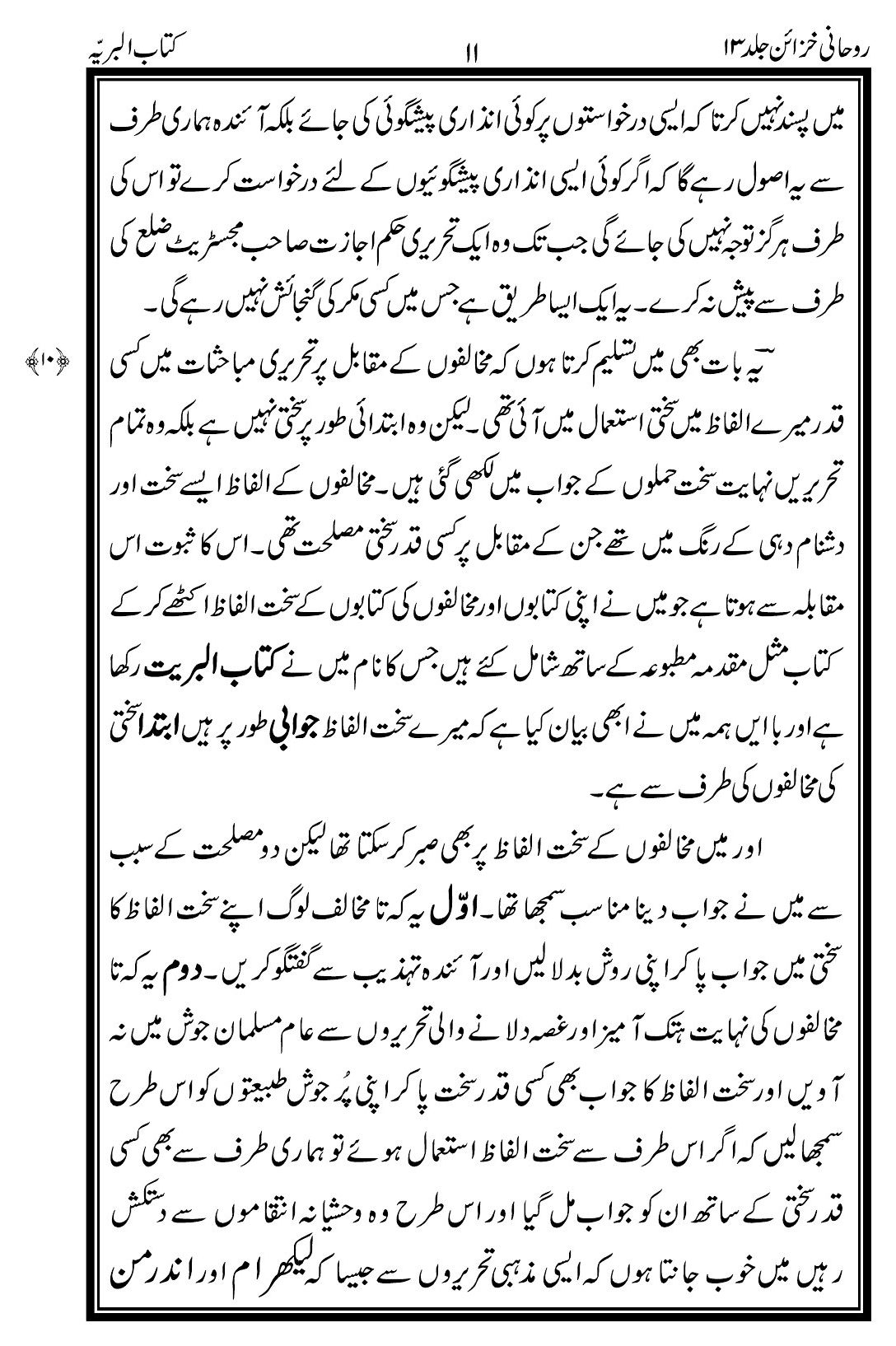
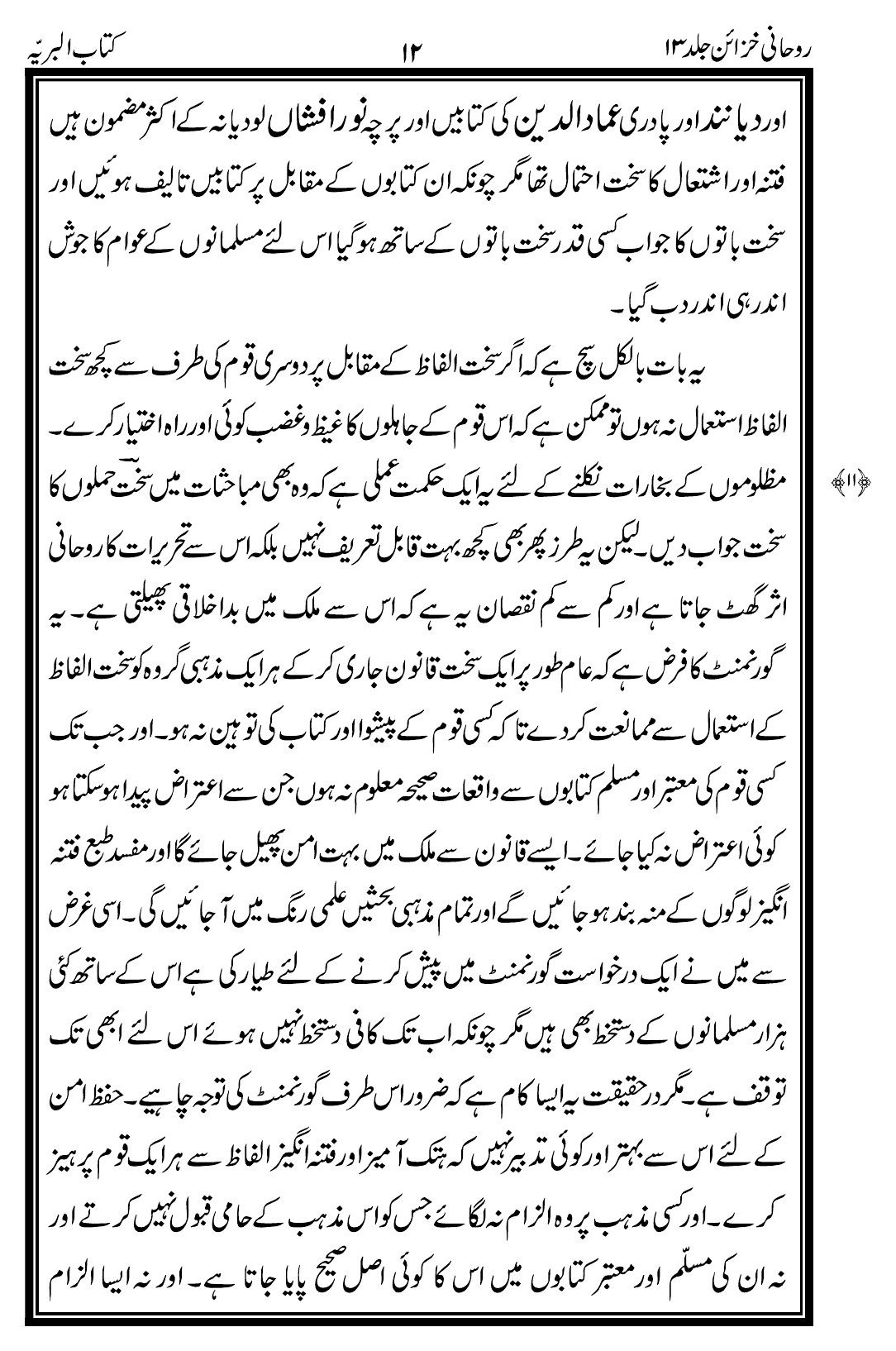
یہ بات بھی میں تسلیم کرتا ہوں کہ مخالفوں کے مقابل پر تحریری مباحثات میں کسی قدر میرے الفاظ میں سختی استعمال میں آئی تھی۔ لیکن وہ ابتدائی طور پر سختی نہیں ہے بلکہ وہ تمام تحریریں نہایت سخت حملوں کے جواب میں لکھی گئی ہیں۔ … میرے سخت الفاظ جوابی طور پر ہیں ابتدا سختی کی مخالفوں کی طرف سے ہے۔
I also admit that in written debates with opponents some harshness came into my words. But I did not start it: all those writings were written in reply to very harsh attacks. … My harsh words are a reply; the harshness was started by the opponents.
He then gives two reasons for answering firmly instead of staying silent:
- So the attackers would stop. Receiving a firm reply, they might change their ways and speak with civility in future.
- So ordinary Muslims would not turn to violence. The opponents' writings were “deeply insulting and provoking.” Seeing them answered firmly in writing, Muslims would be satisfied and refrain from “savage acts of revenge.”
He names the writings he means: the books of Lekh Ram, Indarman, Dayanand and Padre Imad-ud-Din, and the Christian paper Nur Afshan of Ludhiana, all of them Hindu and Christian writers who attacked Islam and the Holy Prophet ﷺ. These are the “Brahmins and priests” of page 547, not Muslims.
6. Harsh is not the same as abusive
He defined abuse as saying something false in order to hurt (Izala-e-Auham, Ruhani Khazain Vol. 3, p. 109). A harsh word that is true is not abuse, and scripture uses such words:
- The Quran describes an opponent of the Prophet as zanim (68:13), which translators render “base-born” or even “illegitimate.”
- Jesus called the religious leaders who opposed him “an evil and adulterous generation” (Matthew 12:39). No one takes that literally.
The full research. This post summarises a far more detailed answer, with every scan, dictionary entry and reference: Ahmadi Answers: the “children of adulterers” allegation
Quran references use the standard numbering. In editions that count the Bismillah as the first verse, add one (for example, 16:90 is 16:91).
Sources
- Aina-e-Kamalat-e-Islam (Ruhani Khazain, Vol. 5), pp. 535, 547–548
- Al-Hakam, Vol. 11, No. 7, 24 February 1907, p. 13
- Izala-e-Auham (Ruhani Khazain, Vol. 3), pp. 109–110
- Kitab-ul-Bariyyah (Ruhani Khazain, Vol. 13), pp. 11–12 (pp. 10–11 in the first edition)
- The Holy Quran, 2:6–7, 2:177, 10:23, 16:90, 18:50, 42:27, 68:13
- Taj al-Arus and Lisan al-Arab, entries for baghy
- The Bible, Matthew 12:39
- Ahmadi Answers: the “children of adulterers” allegation, the full, detailed answer this post summarises