Ummahat-ul-Momineen: the 1898 attack on the Prophet's wives, and how he answered it
In 1898 a convert to Christianity published Ummahat-ul-Momineen, an attack on the Holy Prophet ﷺ and his wives. Muslim leaders asked the government to ban it. Hadhrat Mirza Ghulam Ahmad (as) argued against the ban and called for a reply instead.
The book
Ummahat-ul-Momineen (“Mothers of the Believers”) was written by Ahmad Shah, a Kashmiri convert to Christianity and former missionary at Jagraon in Ludhiana district. It was written in England, printed at the RPS Press in Gujranwala, and distributed in early 1898. It reached Qadian on 15 February 1898.
As its title suggests, it attacked the Holy Prophet ﷺ through his wives. It has been described as “a highly provocative and abusive treatise” and “a malignant attack upon the noble character of the Holy Prophet” and his family.
The call for a ban
Muslims were deeply hurt. The Anjuman Himayat-i-Islam of Lahore sent the government a memorial (No. 1348, dated 26 April 1898) asking for the book to be confiscated, describing it as full of “shameful and disgraceful falsehoods and fabrications.”
His answer: reply, don't ban
Hadhrat Mirza Ghulam Ahmad (as) said the memorial was the wrong step. His reasons:
- It was too late. The book had already been widely published, so confiscating it would achieve nothing.
- It would look like defeat. Asking the government to silence a book, instead of answering it, amounted to admitting it could not be answered.
- This book was not the only one. Christian missionaries and the Arya Samaj had been attacking Islam for about sixty years. What was needed was a united, well-led reply to all of it.
He proposed that Muslims choose one qualified person to lead that reply and pick his own helpers, and he offered his own services for the task, as Joseph offered his in the famine. He set this out in Al-Balagh, also called Fariyad-e-Dard (“A Cry of Anguish”), with an English translation printed in Lahore in 1898.
Not a contradiction: one rule for every religion
The same year, in Kitab-ul-Bariyyah, he did ask the government for a law, but not one that protected only Islam:
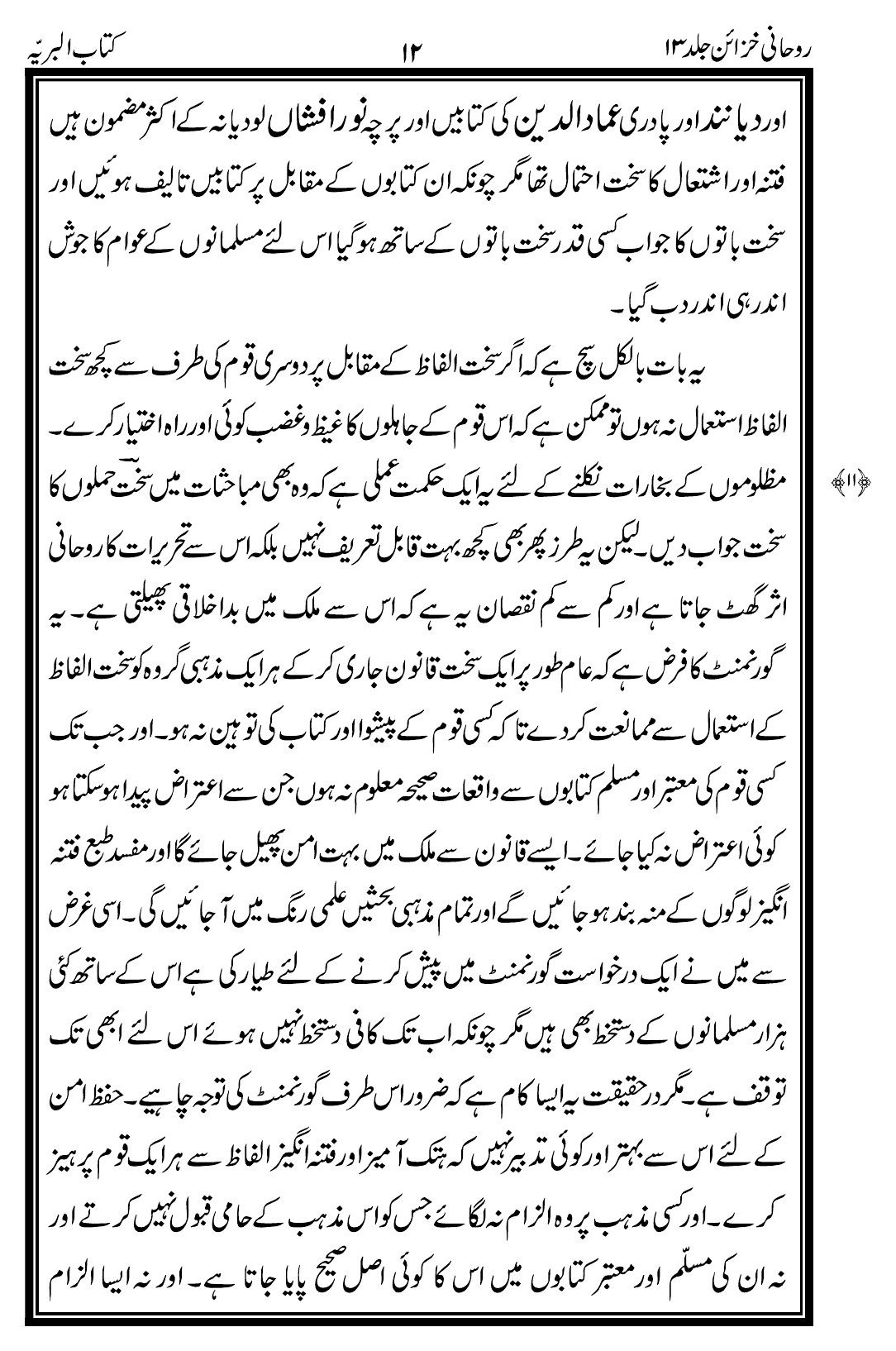
یہ گورنمنٹ کا فرض ہے کہ عام طور پر ایک سخت قانون جاری کر کے ہر ایک مذہبی گروہ کو سخت الفاظ کے استعمال سے ممانعت کردے تا کہ کسی قوم کے پیشوا اور کتاب کی توہین نہ ہو۔ اور جب تک کسی قوم کی معتبر اور مسلم کتابوں سے واقعات صحیحہ معلوم نہ ہوں جن سے اعتراض پیدا ہو سکتا ہو کوئی اعتراض نہ کیا جائے۔
It is the government's duty to pass a strict general law forbidding every religious group from using harsh language, so that no people's founder or scripture is insulted; and that no objection be made unless it rests on true facts found in that people's own trusted and accepted books.
So he did not want one book banned to shield Islam from criticism. He wanted the same rule for everyone: no insulting anyone's founder or scripture, and criticism only from a religion's own sources. Criticism of Islam was welcome to be answered; abuse of anyone's prophet was not.
Sources
- This Week in History, 15–21 February, Al Hakam
- The Message, or A Cry of Anguish (Al-Balagh), alislam.org
- Life of Ahmad, alislam.org
- Kitab-ul-Bariyyah (Ruhani Khazain, Vol. 13), p. 12