Did Hadhrat Mirza Ghulam Ahmad (as) call his deniers “bastards” (walad-ul-haram)?
کیا منکرین کو «ولد الحرام» کہا گیا؟
The claim
In Anwar-ul-Islam he says that anyone who does not accept his victory over Abdullah Atham is walad-ul-haram, a “bastard.” So he called everyone who denied him a bastard.
The short answer
No. He describes one specific kind of person: someone who, out of hostility to Islam, keeps declaring the Christians victorious and will not answer the argument. On the very next page he says: “We call no one walad-ul-haram, nor do we name anyone haramzada.” The sign he gives is conduct, not birth, and he tells such a person exactly how to become “halal-zada.”
Read the full answerHide the full answerClick to see the original book pages and sources (7 min read)
The background: who Atham was, and what happened
Abdullah Atham was born a Muslim in Ambala in 1828 and was baptised a Christian in Karachi in 1853. He became a missionary writer against Islam, and in his book Andruna-e-Bible called the Holy Prophet ﷺ “Dajjal” (Jang-e-Muqaddas, p. 293). More about him.
In May and June 1893, Hadhrat Mirza Ghulam Ahmad (as) debated him in Amritsar for fifteen days, a debate later published as Jang-e-Muqaddas. On the last day, 5 June 1893, he announced a prophecy: the side that was knowingly holding to falsehood and had made a man into God would fall into hawiya within fifteen months, one month for each day of the debate, and be disgraced, provided they did not turn to the truth.
During those fifteen months Atham fell silent. He “did not insult Islam, nor publish any tract of contempt or mockery” (Anwar-ul-Islam, p. 30), and he lived in such fear that he moved from city to city (p. 18). When the period ended on 5 September 1894 and he was still alive, the Christians celebrated publicly, announcing that “the Lord Messiah saved his life” and that Christianity had beaten Islam. Some Muslim clerics joined them, among them Mian Abdul Haq Ghaznavi of Amritsar.
He answered in Anwar-ul-Islam (1894). Atham's fear and silence showed he had turned towards the truth, so the condition had been met. If that was false, Atham need only swear publicly that he had never feared and had never turned towards Islam. He offered Atham a reward to take the oath, raising it from 1,000 to 2,000 and then 3,000 rupees (pp. 32, 38). Atham never took the oath. He died on 27 July 1896. It is in this book, addressed to those who kept proclaiming the Christians' victory, that the words critics quote appear.
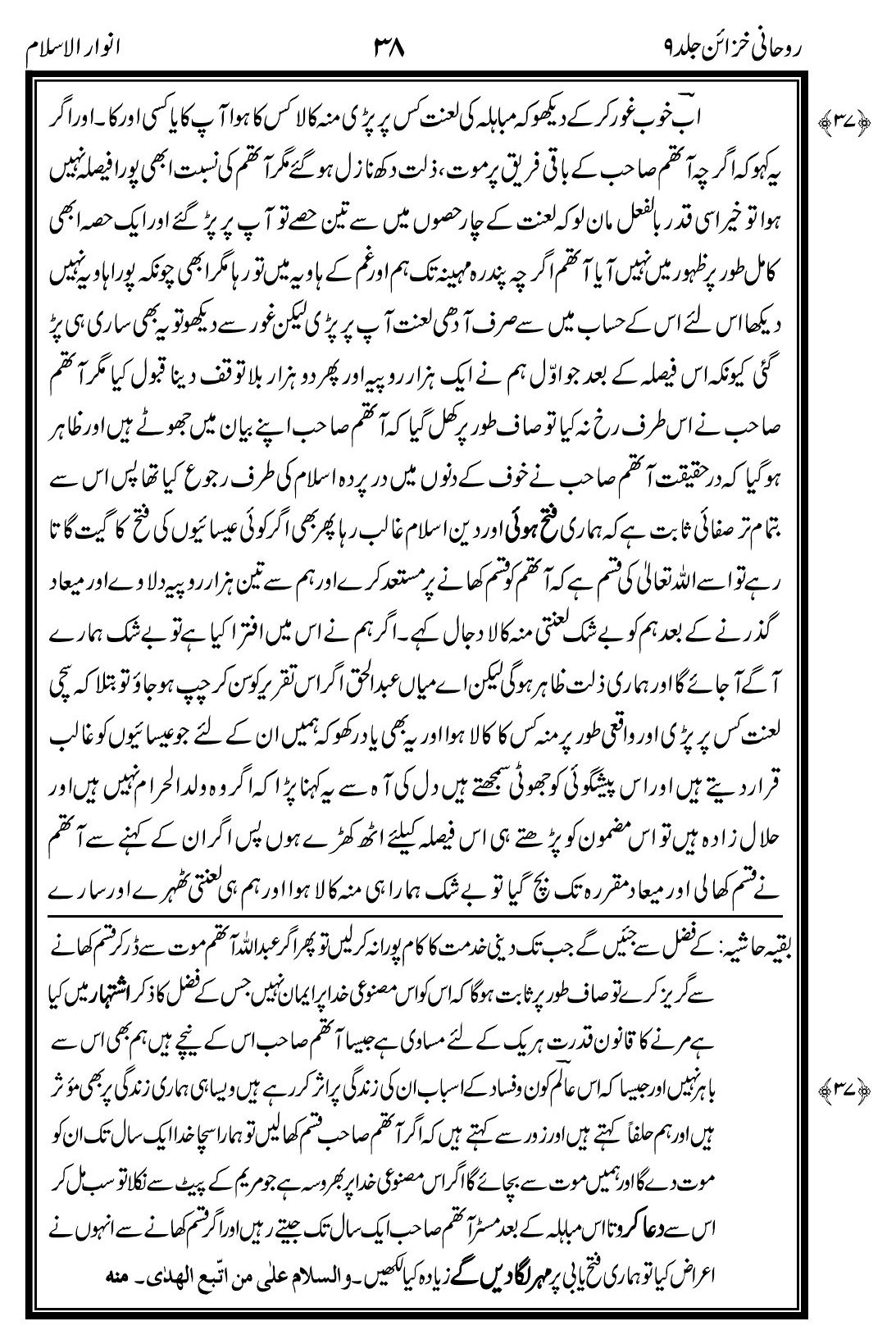
1. Read who he is describing
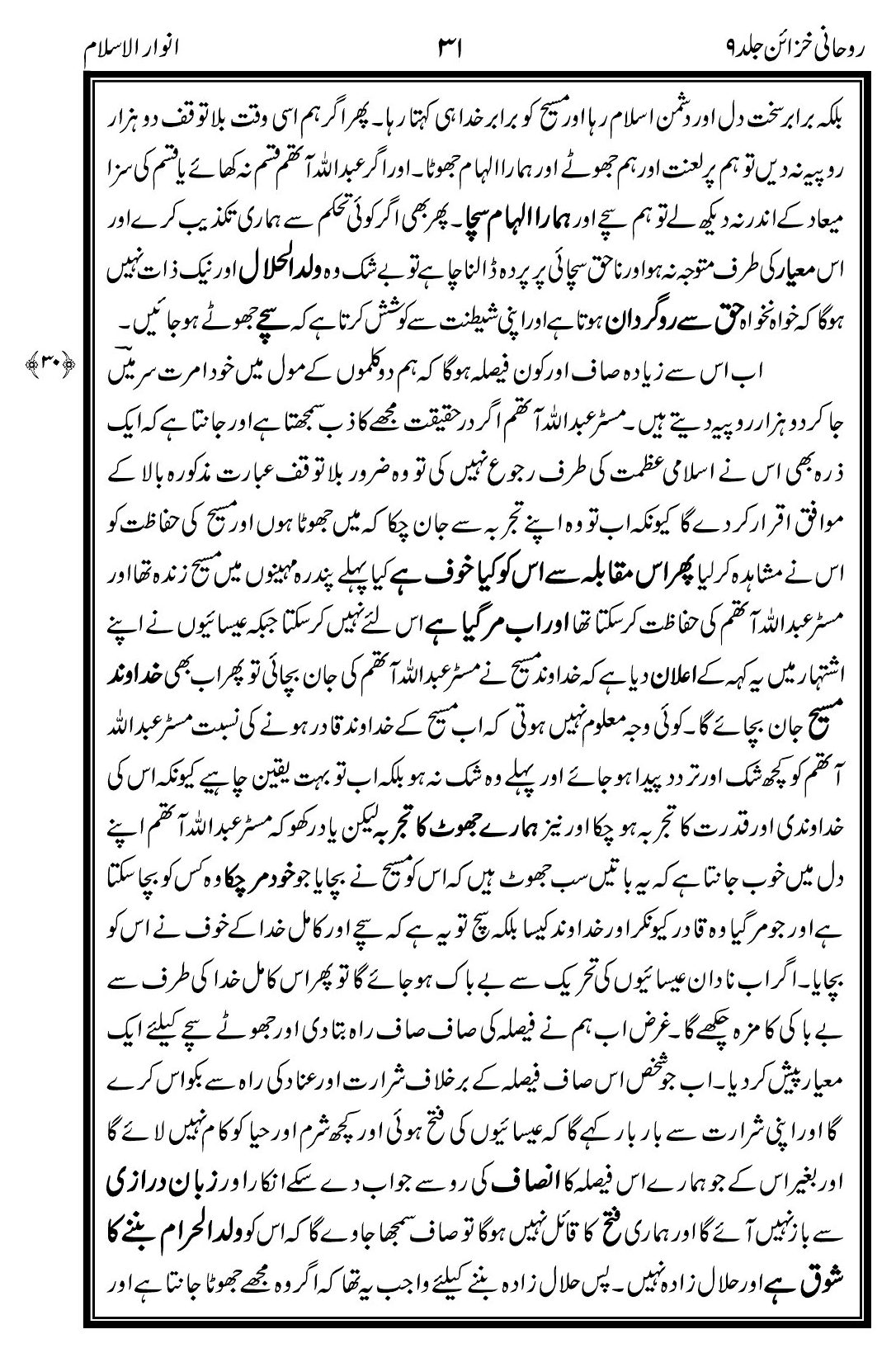
اب جو شخص اس صاف فیصلہ کے برخلاف شرارت اور عناد کی راہ سے بکواس کرے گا اور اپنی شرارت سے بار بار کہے گا کہ عیسائیوں کی فتح ہوئی اور کچھ شرم اور حیا کو کام نہیں لائے گا اور بغیر اس کے جو ہمارے اس فیصلہ کا انصاف کی رو سے جواب دے سکے انکار اور زبان درازی سے باز نہیں آئے گا اور ہماری فتح کا قائل نہیں ہوگا تو صاف سمجھا جاوے گا کہ اس کو ولد الحرام بننے کا شوق ہے اور حلال زادہ نہیں۔
Now whoever, out of mischief and hostility, talks nonsense against this clear decision, keeps saying over and over that the Christians won, shows no shame or modesty, cannot answer our decision fairly yet will not stop denying and abusing, and does not accept our victory, it will be clearly understood that he is eager to become walad-ul-haram, and is not halal-zada.
This is not “everyone who rejects him.” It is one kind of person, described in detail: someone who, out of hostility, keeps proclaiming a Christian missionary's victory over Islam, cannot answer the argument, and carries on abusing. And “eager to become” describes a choice. No one chooses their birth.
2. The next page says: “We call no one haramzada”
A few lines later he says plainly:
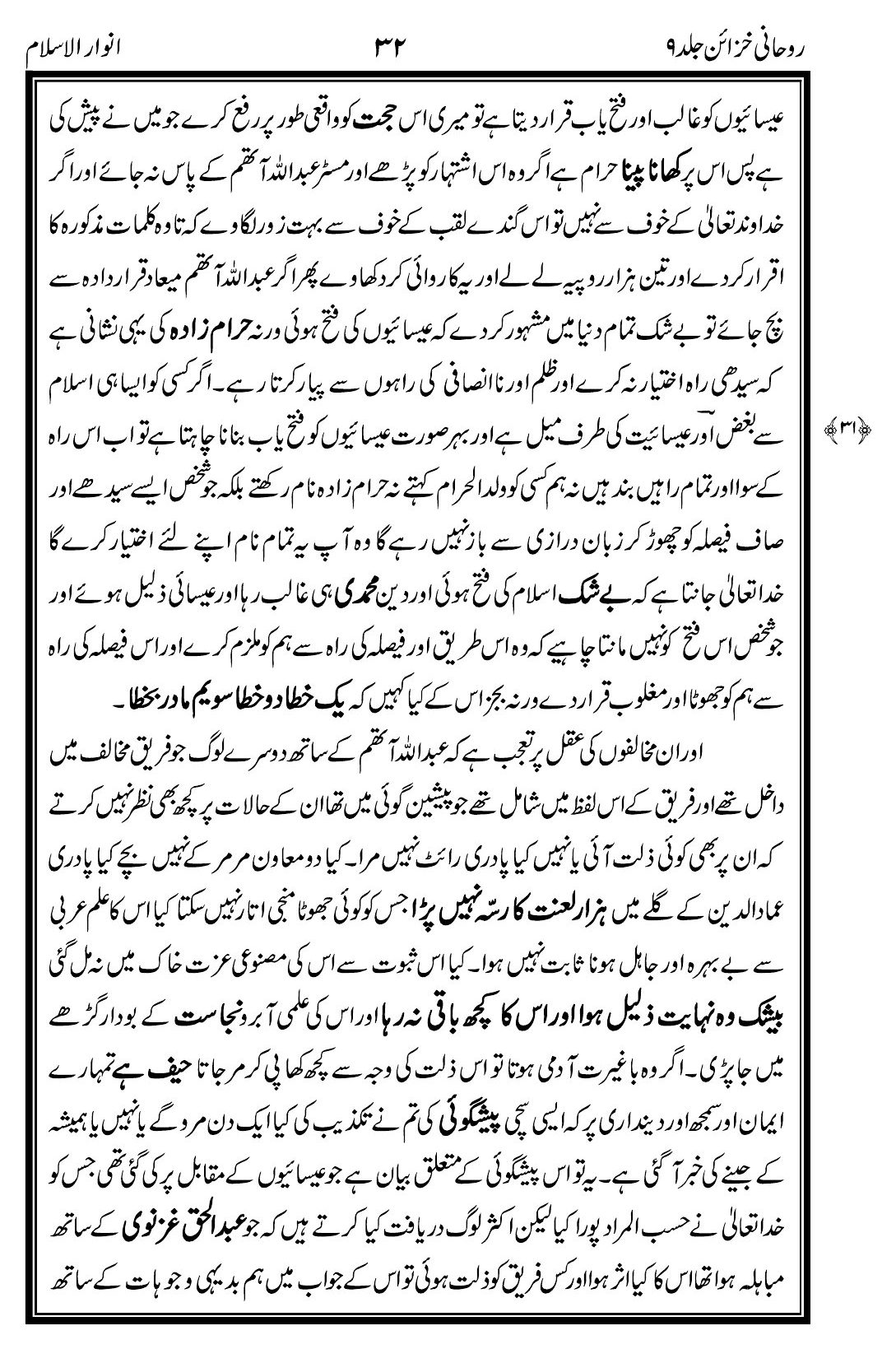
اگر کسی کو ایسا ہی اسلام سے بغض اور عیسائیت کی طرف میل ہے اور بہرصورت عیسائیوں کو فتح یاب بنانا چاہتا ہے تو اب اس راہ کے سوا اور تمام راہیں بند ہیں نہ ہم کسی کو ولد الحرام کہتے نہ حرام زادہ نام رکھتے بلکہ جو شخص ایسے سیدھے اور صاف فیصلہ کو چھوڑ کر زبان درازی سے باز نہیں رہے گا وہ آپ یہ تمام نام اپنے لئے اختیار کرے گا۔
If someone has such hatred for Islam and leaning towards Christianity that he wants to make the Christians victorious at any cost, then every other road is closed. We call no one walad-ul-haram, nor do we name anyone haramzada. Rather, whoever abandons such a straight and clear decision and will not stop his abusive tongue will himself choose all these names for himself.
The passage critics quote comes with its own denial, one page later.
3. He defines the word by conduct
On the same page he states what the “sign” of such a person is:
ورنہ حرام زادہ کی یہی نشانی ہے کہ سیدھی راہ اختیار نہ کرے اور ظلم اور ناانصافی کی راہوں سے پیار کرتا رہے۔
Otherwise, this is the sign of a haramzada: that he will not take the straight path, and keeps loving the ways of injustice and unfairness.
The sign is behaviour: refusing the straight path and loving injustice. It says nothing about anyone's parents.
4. He tells them how to become “halal-zada”
Right after the sentence critics quote, he explains the way out:
پس حلال زادہ بننے کیلئے واجب یہ تھا کہ اگر وہ مجھے جھوٹا جانتا ہے اور عیسائیوں کو غالب اور فتح یاب قرار دیتا ہے تو میری اس حجت کو واقعی طور پر رفع کرے جو میں نے پیش کی ہے
So to become halal-zada, what he should have done, if he considers me a liar and declares the Christians the victors, is genuinely refute the argument I have put forward.
He even tells such a person to go to Atham and get him to take the oath, and if Atham then survives the set period, “by all means announce to the whole world that the Christians won.” Nobody can change their parentage. A label you can shed by answering an argument fairly is about conduct, not birth.
5. He names who he means, and says why
A few pages later he repeats the point, and says exactly whom it is for:
اور یہ بھی یاد رکھو کہ ہمیں ان کے لئے جو عیسائیوں کو غالب قرار دیتے ہیں اور اس پیشگوئی کو جھوٹی سمجھتے ہیں دل کی آہ سے یہ کہنا پڑا کہ اگر وہ ولدالحرام نہیں ہیں اور حلال زادہ ہیں تو اس مضمون کو پڑھتے ہی اس فیصلہ کیلئے اٹھ کھڑے ہوں۔
And remember also that, about those who declare the Christians victorious and call this prophecy false, we were compelled to say, with a sigh from the heart: if they are not walad-ul-haram and are halal-zada, let them rise for this decision as soon as they read this.
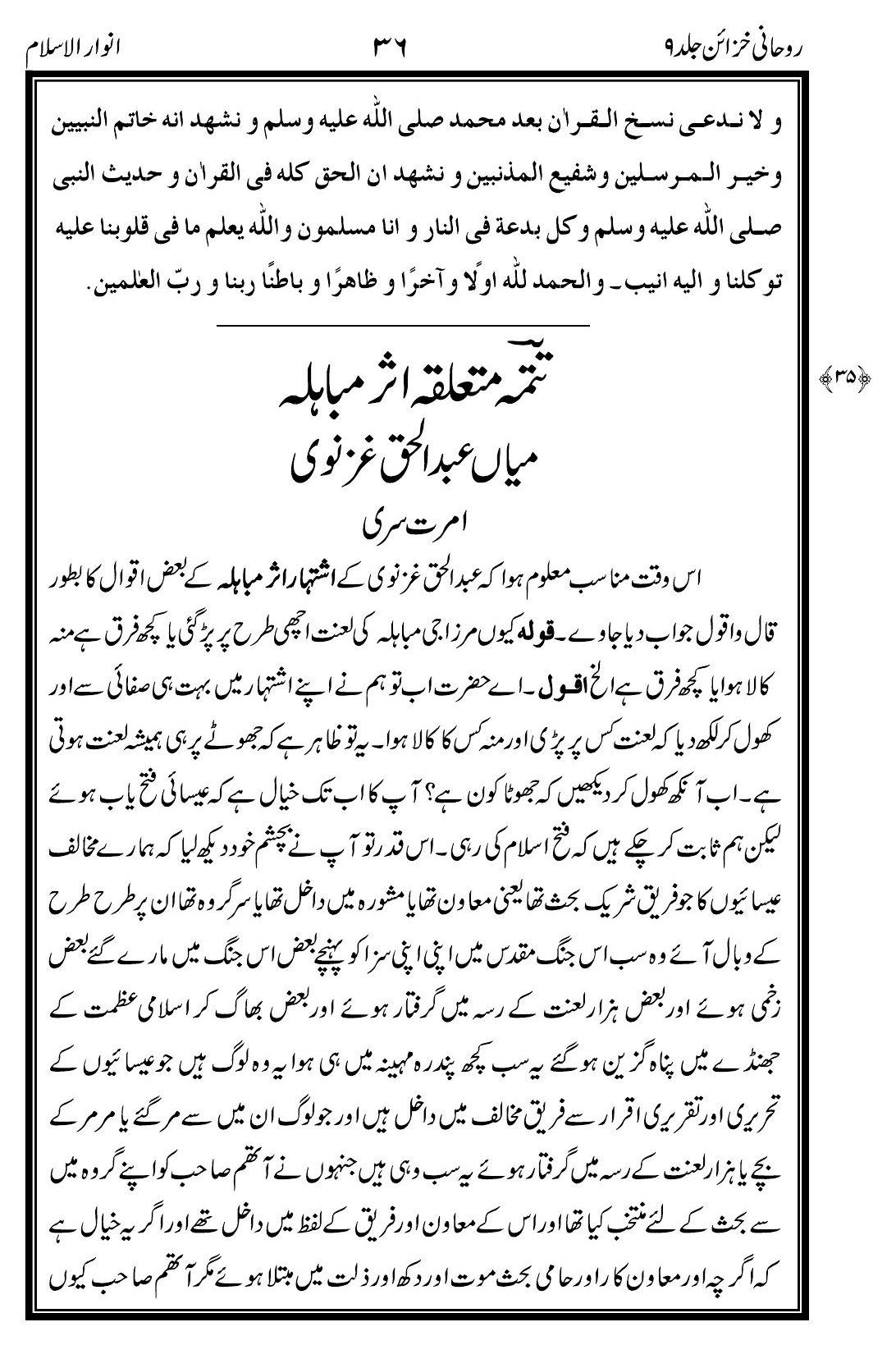
The section is addressed by name to Mian Abdul Haq Ghaznavi of Amritsar, a Muslim cleric whom he tells: “You still think the Christians were victorious, but we have shown that the victory stayed with Islam” (p. 36).
And these were not ordinary Muslims being insulted for disagreeing. They were the ones declaring other Muslims disbelievers. He asks them:
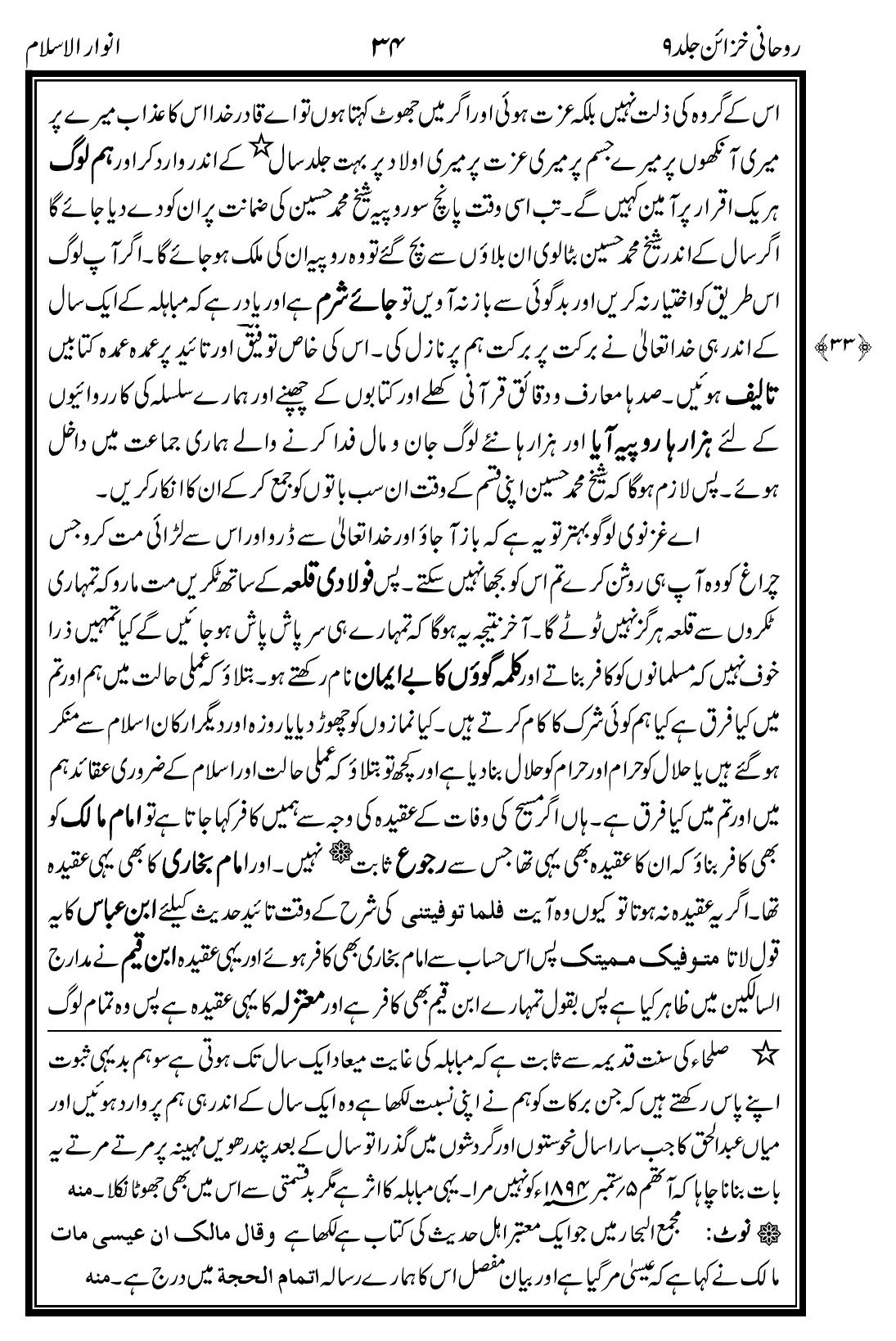
اے غزنوی لوگو … کیا تمہیں ذرا خوف نہیں کہ مسلمانوں کو کافر بناتے اور کلمہ گوؤں کا بے ایمان نام رکھتے ہو۔
O Ghaznavi people … have you no fear at all, that you make Muslims into disbelievers, and give those who recite the Kalima the name “faithless”?
6. The Quran judges belonging by deeds
When Noah pleaded for his son, Allah replied:
قَالَ يَا نُوحُ إِنَّهُ لَيْسَ مِنْ أَهْلِكَ ۖ إِنَّهُ عَمَلٌ غَيْرُ صَالِحٍ
He said: “O Noah, he is not of your family; he is (a man) of unrighteous conduct.”
Noah's son was his son by birth. The Quran says he was “not of your family” because of what he did. Belonging, legitimacy and family are judged by conduct, and that is how this passage uses the words too.
Quran references use the standard numbering. In editions that count the Bismillah as the first verse, add one (11:46 is 11:47).
Sources
- Anwar-ul-Islam (Ruhani Khazain, Vol. 9), pp. 18, 30–38
- Abdullah Athim: a life reduced to footnotes, Al Hakam
- This Week in History, 1–7 June, Al Hakam
- The Holy Quran, 11:46
- Ahmadi Answers: the “haramzada” allegation