Did the prophecy of Hadhrat Mirza Ghulam Ahmad (as) about Abdullah Atham fail?
کیا آتھم کے بارے میں پیشگوئی جھوٹی نکلی؟
The claim
He prophesied that the Christian missionary Abdullah Atham would die within fifteen months of the 1893 debate. When the time ran out in September 1894, Atham was alive. So the prophecy failed.
The short answer
No. The prophecy carried a condition from the first day: “provided he does not turn to the truth.” Atham, who had called the Holy Prophet ﷺ “Dajjal,” stopped attacking Islam and lived in fear for those fifteen months, so the punishment was held back. When he was challenged to swear that he had not turned, for a reward of up to 4,000 rupees, he refused. He died on 27 July 1896, within seven months of the final challenge.
Read the full answerHide the full answerClick to see the original book pages and sources (15 min read)
1. What the prophecy actually said
On the last day of the debate, 5 June 1893, Hadhrat Mirza Ghulam Ahmad (as) said that he had prayed for God to decide between the two sides, and had been given this sign:
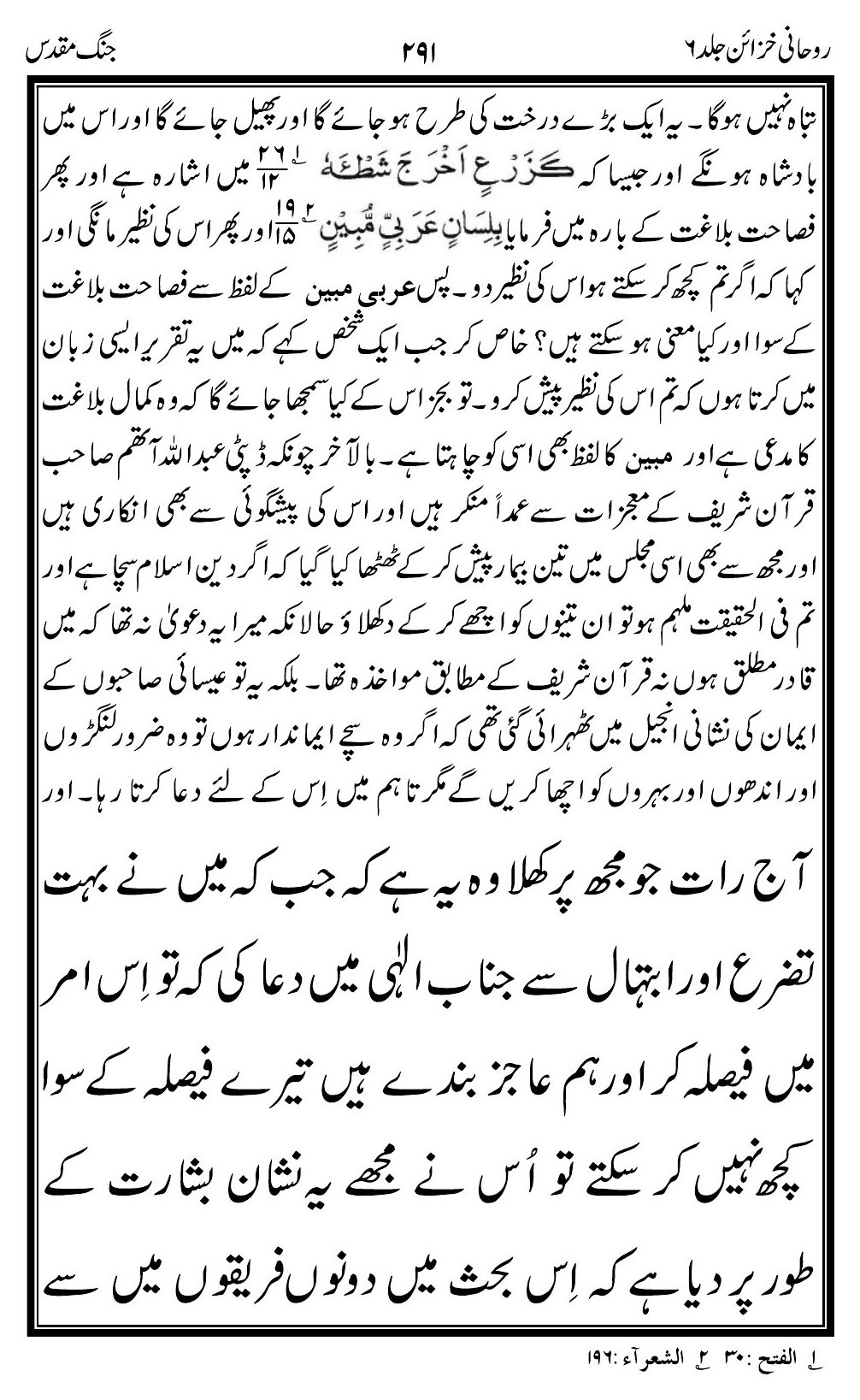
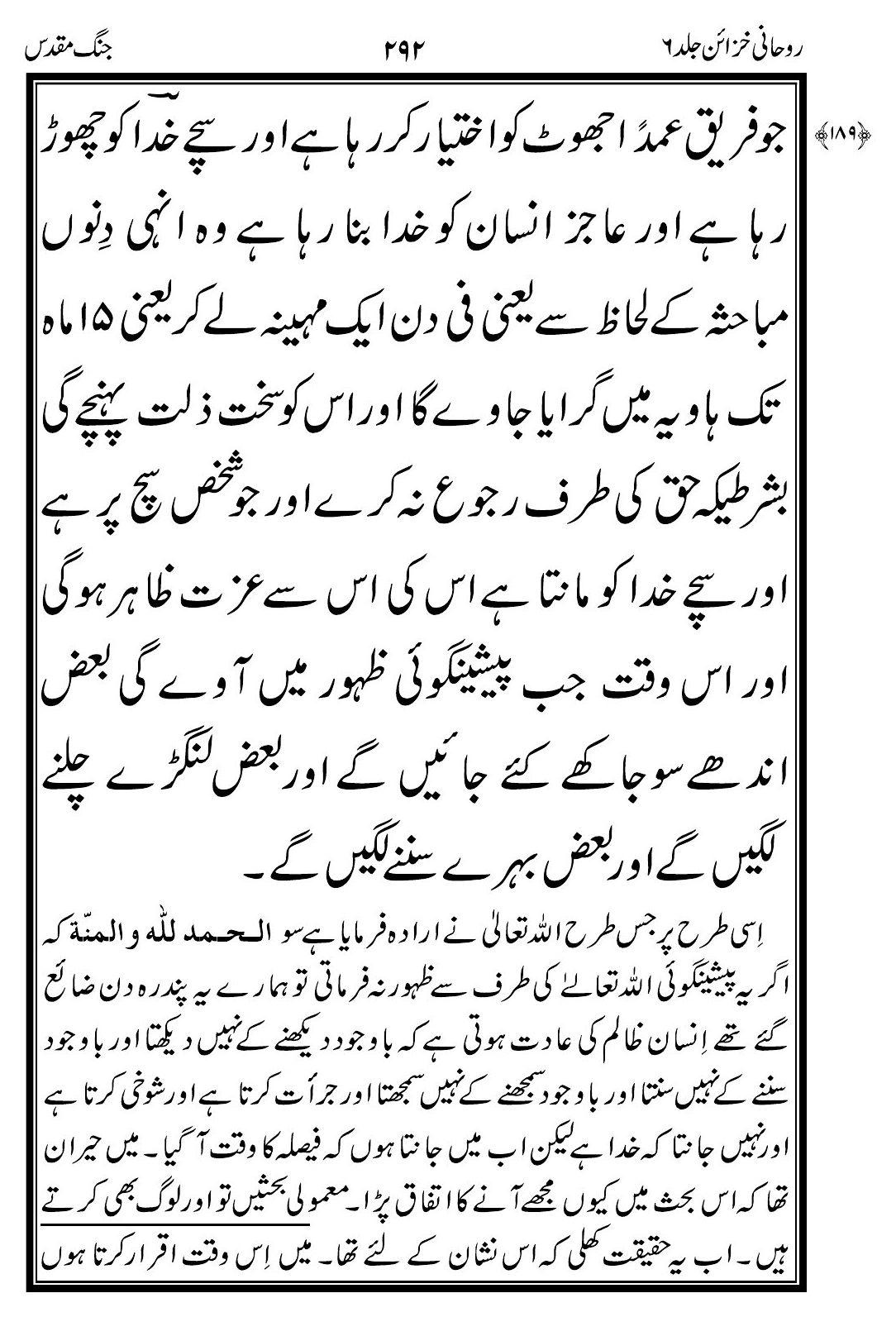
جو فریق عمداً جھوٹ کو اختیار کر رہا ہے اور سچے خدا کو چھوڑ رہا ہے اور عاجز انسان کو خدا بنا رہا ہے وہ انہی دنوں مباحثہ کے لحاظ سے یعنی فی دن ایک مہینہ لے کر یعنی ۱۵ ماہ تک ہاویہ میں گرایا جاوے گا اور اس کو سخت ذلت پہنچے گی بشرطیکہ حق کی طرف رجوع نہ کرے
The party that is knowingly choosing falsehood, abandoning the true God and making a helpless man into God, shall, counting one month for each day of the debate, that is, within fifteen months, be thrown into hawiya and suffer severe disgrace, provided he does not turn towards the truth.
2. Why it was made, and against whom
This was not a prophecy against a neutral scholar. On the same pages:
- Atham had mocked him by bringing three sick people into the hall, a blind man, a lame man and a deaf man, and telling him to heal them if Islam was true (p. 291).
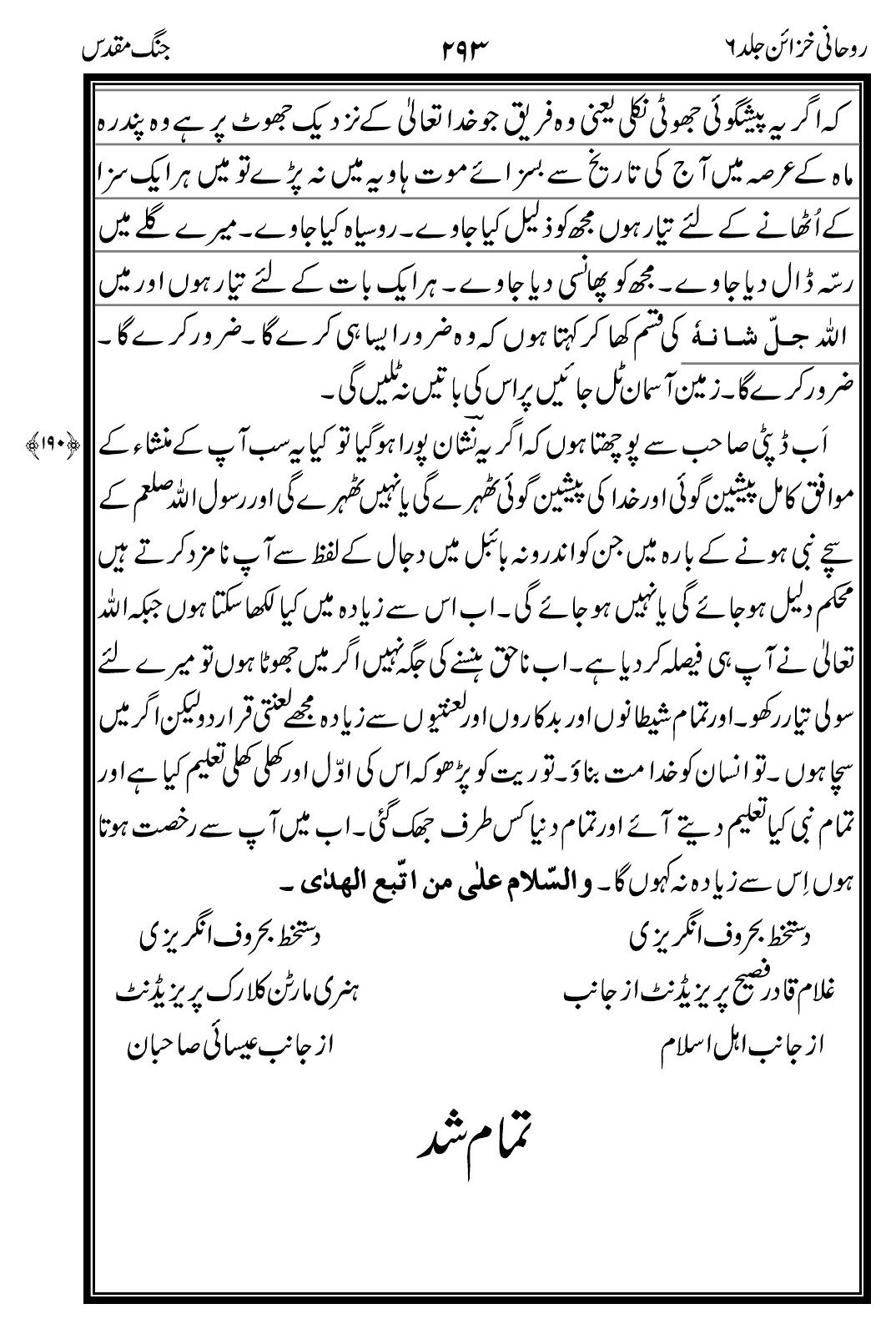
- He addresses Atham as the man “who in Andruna-e-Bible names the Holy Prophet ﷺ with the word Dajjal” (p. 293).
The prophecy was a warning to a man who had left Islam and called its Prophet the Antichrist. The condition offered him a way out. Did Atham really call him Dajjal? The record.
3. The condition was there from the first day
The words “provided he does not turn towards the truth” are in the prophecy itself, not added later. And a warning that is lifted when the person turns back is how the Quran describes God's warnings:
فَلَوْلَا كَانَتْ قَرْيَةٌ آمَنَتْ فَنَفَعَهَا إِيمَانُهَا إِلَّا قَوْمَ يُونُسَ لَمَّا آمَنُوا كَشَفْنَا عَنْهُمْ عَذَابَ الْخِزْيِ فِي الْحَيَاةِ الدُّنْيَا وَمَتَّعْنَاهُمْ إِلَىٰ حِينٍ
Why was there no town that believed and benefited from its faith, except the people of Jonah? When they believed, We removed from them the punishment of disgrace in the life of this world, and let them enjoy life for a while.
Jonah's warning to his people was real, and it was lifted because they turned. No one calls Jonah a false prophet.
4. Atham turned, out of fear
For the fifteen months, Atham stopped attacking Islam and lived in visible fear, moving from Amritsar to Ludhiana and then Ferozepur. He “did not insult Islam at all, nor bring out any tract of contempt or mockery” (Anwar-ul-Islam, p. 30). He himself admitted being afraid, though he blamed it on armed men and snakes he said were coming after him, and he never took anyone to court over these supposed attacks. The full account is on his profile.
“But fear is natural. It doesn't mean he turned.” This is the objection of Maulvi Sanaullah Amritsari, one of the fiercest opponents of Hadhrat Mirza Ghulam Ahmad (as). Notice that he does not deny the fear; he admits it:
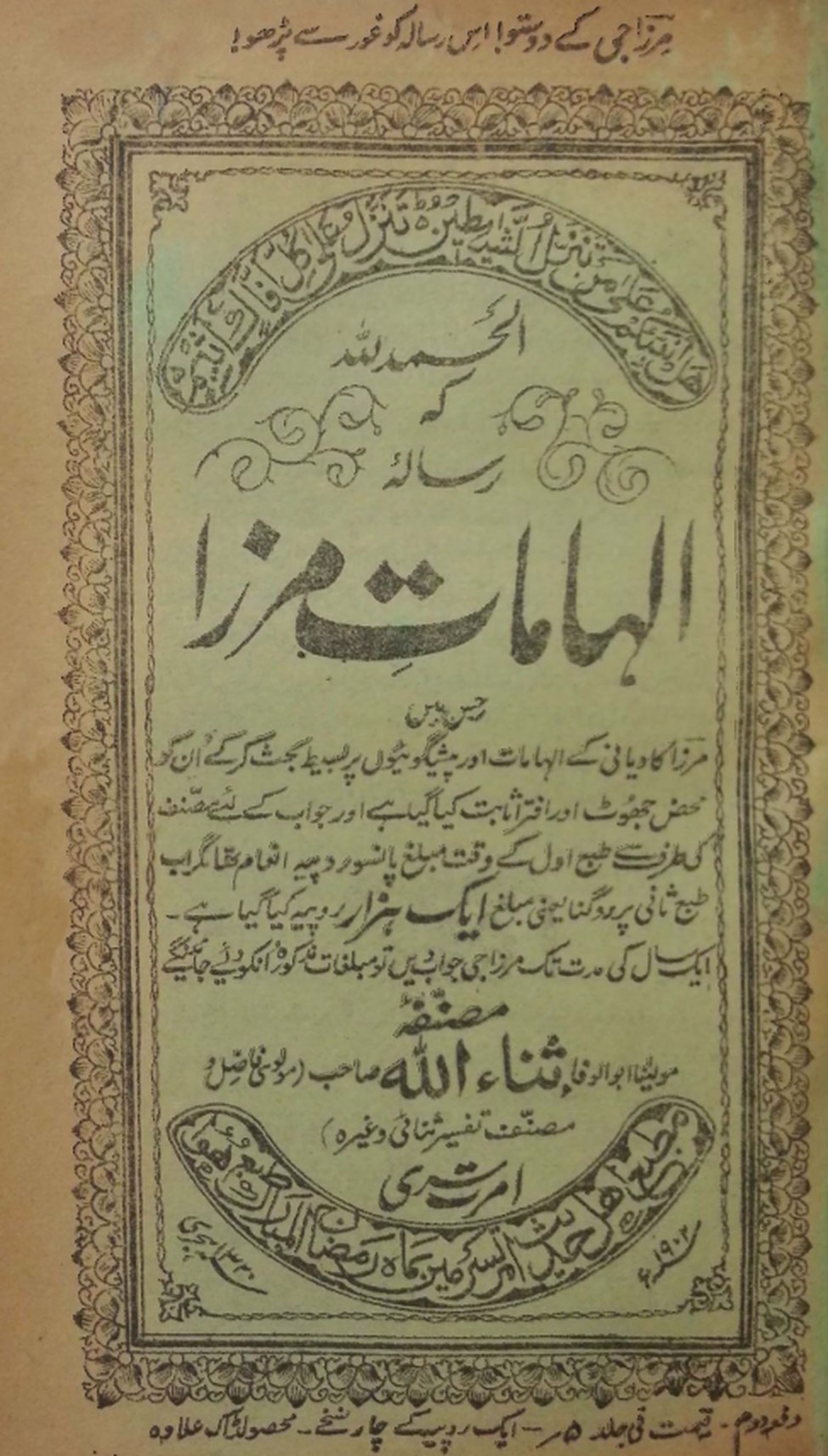
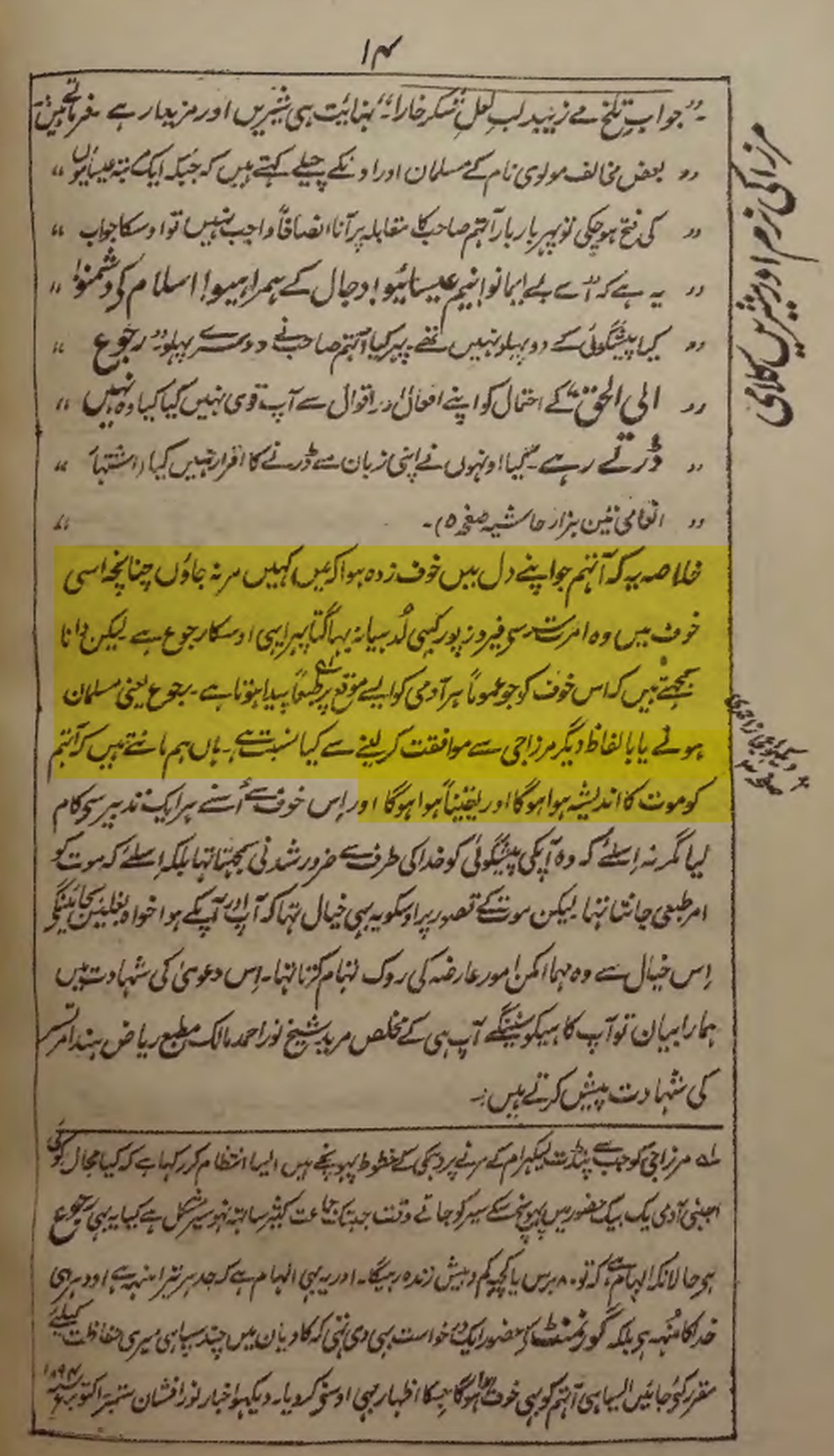
خلاصہ یہ کہ آتھم اپنے دل میں خوف زدہ ہوا کہ کہیں مر نہ جاؤں چنانچہ اسی خوف میں وہ امرتسر سے فیروزپور کبھی لدھیانہ بھاگا پھرا … ہاں ہم مانتے ہیں کہ آتھم کو موت کا اندیشہ ہوا ہوگا اور یقیناً ہوا ہوگا
In short, Atham became afraid in his heart that he might die, and in that fear he ran from Amritsar to Ferozepur, and sometimes to Ludhiana … Yes, we accept that Atham must have feared death, and certainly did.
He argues that anyone would be afraid in that position, so the fear proves nothing. But afraid of what? Atham was a Christian who called the prophecy false. An ordinary man is not frightened for fifteen months by the words of someone he believes to be a liar, and the attacks he blamed were never shown to have happened. Hadhrat Mirza Ghulam Ahmad (as) gives the reason:
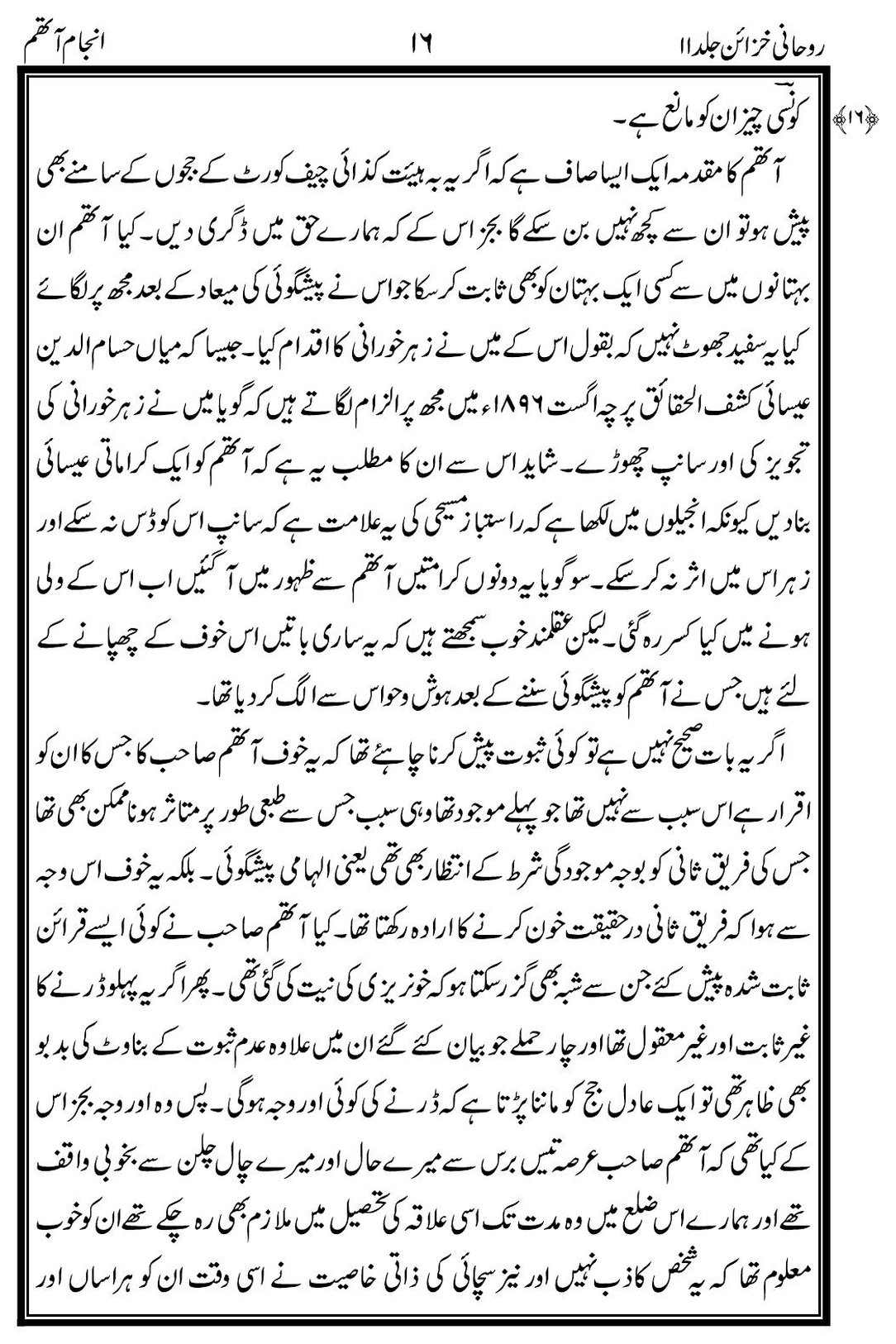
آتھم صاحب عرصہ تیس برس سے میرے حال اور میرے چال چلن سے بخوبی واقف تھے اور ہمارے اس ضلع میں وہ مدت تک اسی علاقہ کی تحصیل میں ملازم بھی رہ چکے تھے ان کو خوب معلوم تھا کہ یہ شخص کاذب نہیں
For thirty years Atham had known my circumstances and my conduct well, and he had long served in the tahsil of this very area of our district. He knew well that this man is not a liar.
And there is a simple test. If his fear was only the ordinary fear of a sick old man, the oath would have cost him nothing, and he could have taken 4,000 rupees for it. He refused (point 6).
5. “But he said the punishment was death”
Critics point to page 293. So what did the prophecy actually threaten: death, or something else? It helps to read the three places where he explains it.
The word in the prophecy is hawiya. The prophecy on page 292 does not use the word “death” (موت). It says the false party will be thrown into hawiya and suffer severe disgrace. Hawiya means a pit or abyss, a fall into ruin; the Quran uses it for hell: «فَأُمُّهُ هَاوِيَةٌ», “his abode will be the abyss” (101:9).
On the same day he said this hawiya would end in death. Page 293:
اگر یہ پیشگوئی جھوٹی نکلی یعنی وہ فریق جو خدا تعالیٰ کے نزدیک جھوٹ پر ہے وہ پندرہ ماہ کے عرصہ میں آج کی تاریخ سے بسزائے موت ہاویہ میں نہ پڑے تو میں ہر ایک سزا کے اٹھانے کے لئے تیار ہوں
If this prophecy turns out false, that is, if the party that is on falsehood in God's sight does not, within fifteen months from today, fall into hawiya by way of the punishment of death, then I am ready to bear any punishment.
That is true, and we do not hide it: the hawiya he foresaw ended in death. Atham's own side read it the same way; during the fifteen months Nur Afshan called it a safe guess about a sick man of 64 or 65 (see his profile).
A year later he explained how the two fit together. In Anwar-ul-Islam he says hawiya has parts, and death is the biggest of them:
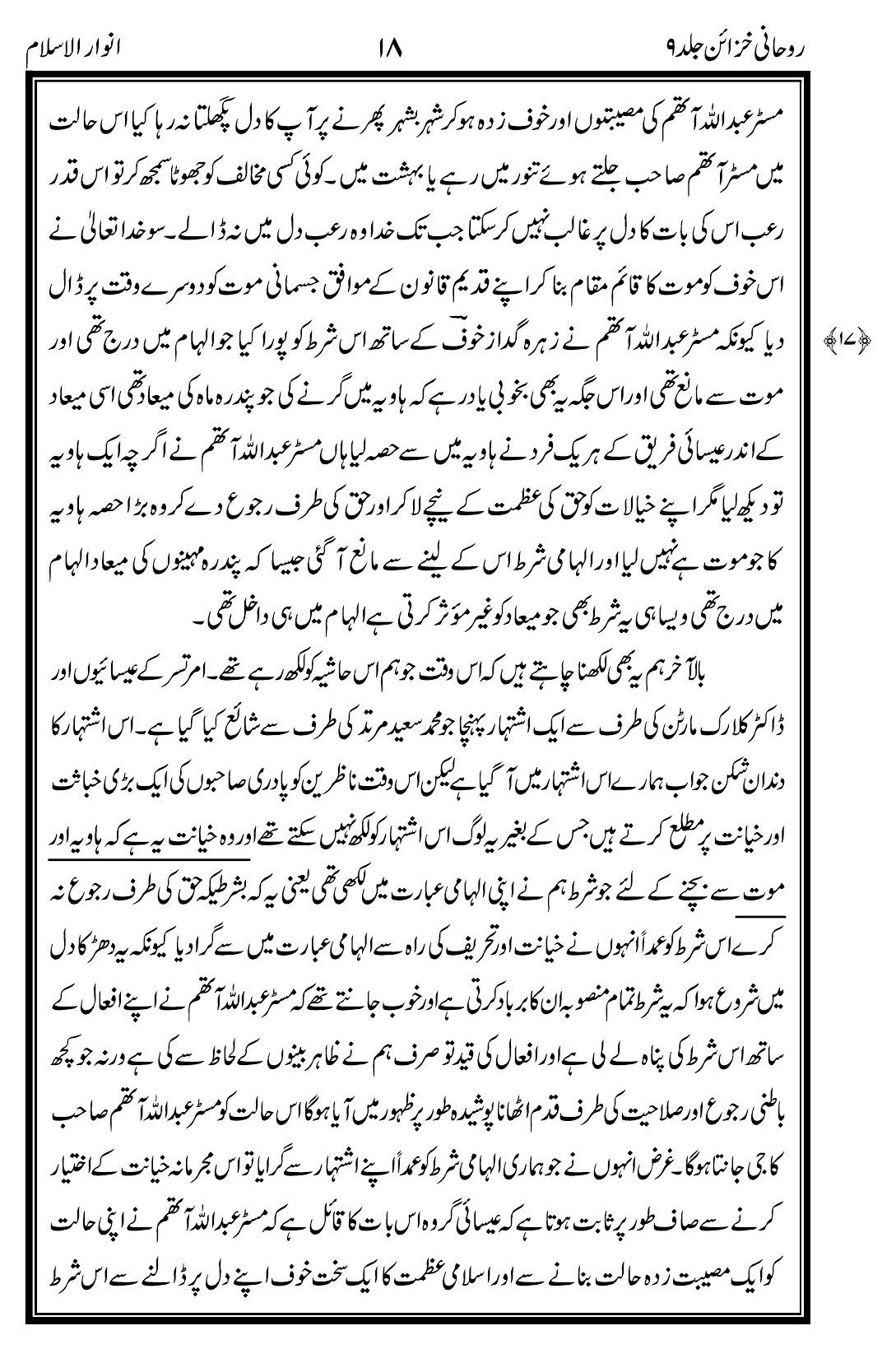
مسٹر عبداللہ آتھم نے اگرچہ ایک ہاویہ تو دیکھ لیا مگر اپنے خیالات کو حق کی عظمت کے نیچے لا کر اور حق کی طرف رجوع دے کر وہ بڑا حصہ ہاویہ کا جو موت ہے نہیں لیا
Although Mr Abdullah Atham did see a hawiya, by bringing his thoughts under the majesty of the truth and turning towards the truth, he did not receive that large part of hawiya which is death.
خدا تعالیٰ نے اس خوف کو موت کا قائم مقام بنا کر اپنے قدیم قانون کے موافق جسمانی موت کو دوسرے وقت پر ڈال دیا
God Almighty made this fear stand in place of death, and according to His ancient law put off physical death to another time.
On the same page he notes that when the Christians announced their “victory,” they left the condition out of the prophecy when they quoted it.
The newspapers of the time bear this out. A week after the deadline, the Christian paper Nur Afshan (14 September 1894) quoted the prophecy like this:
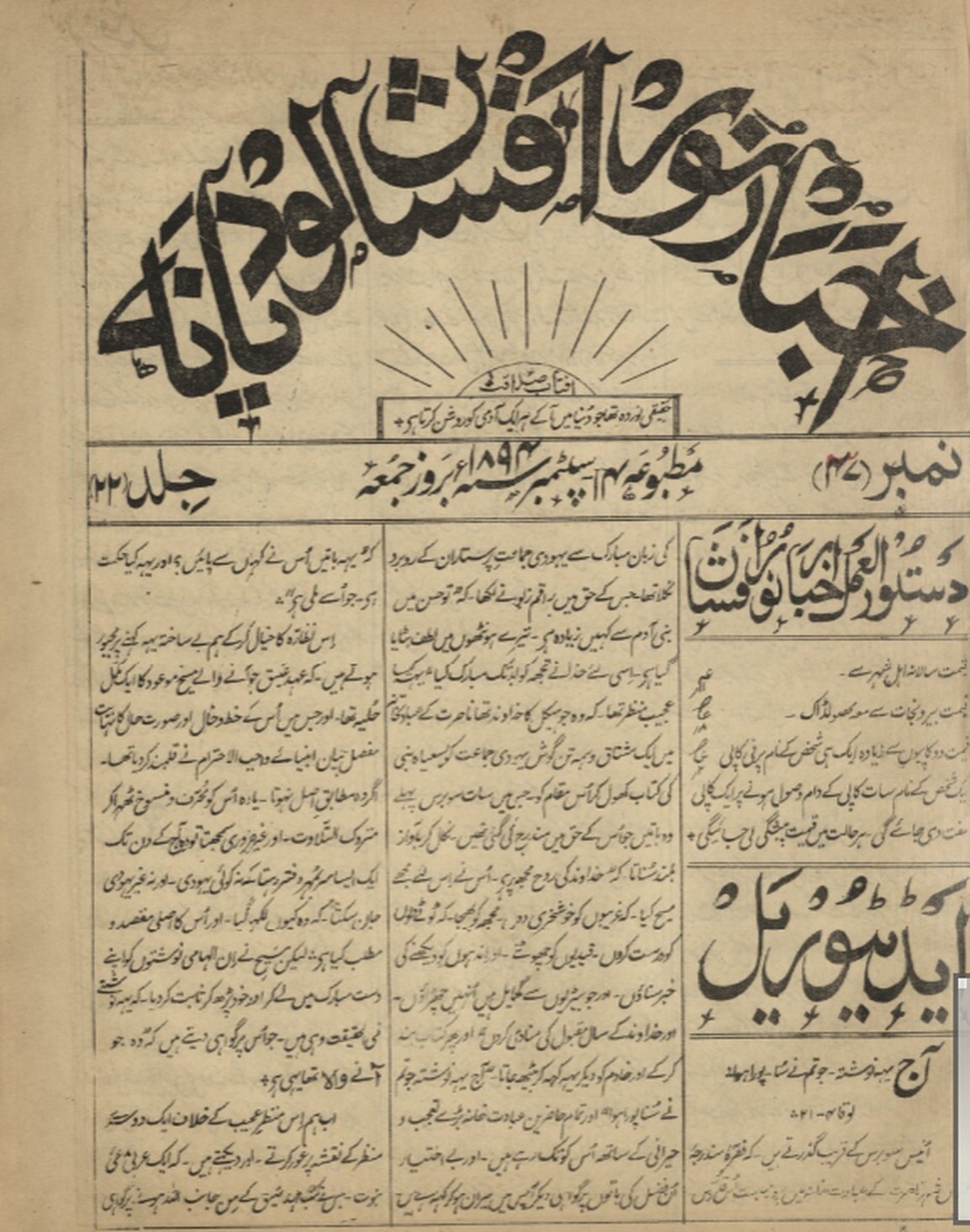
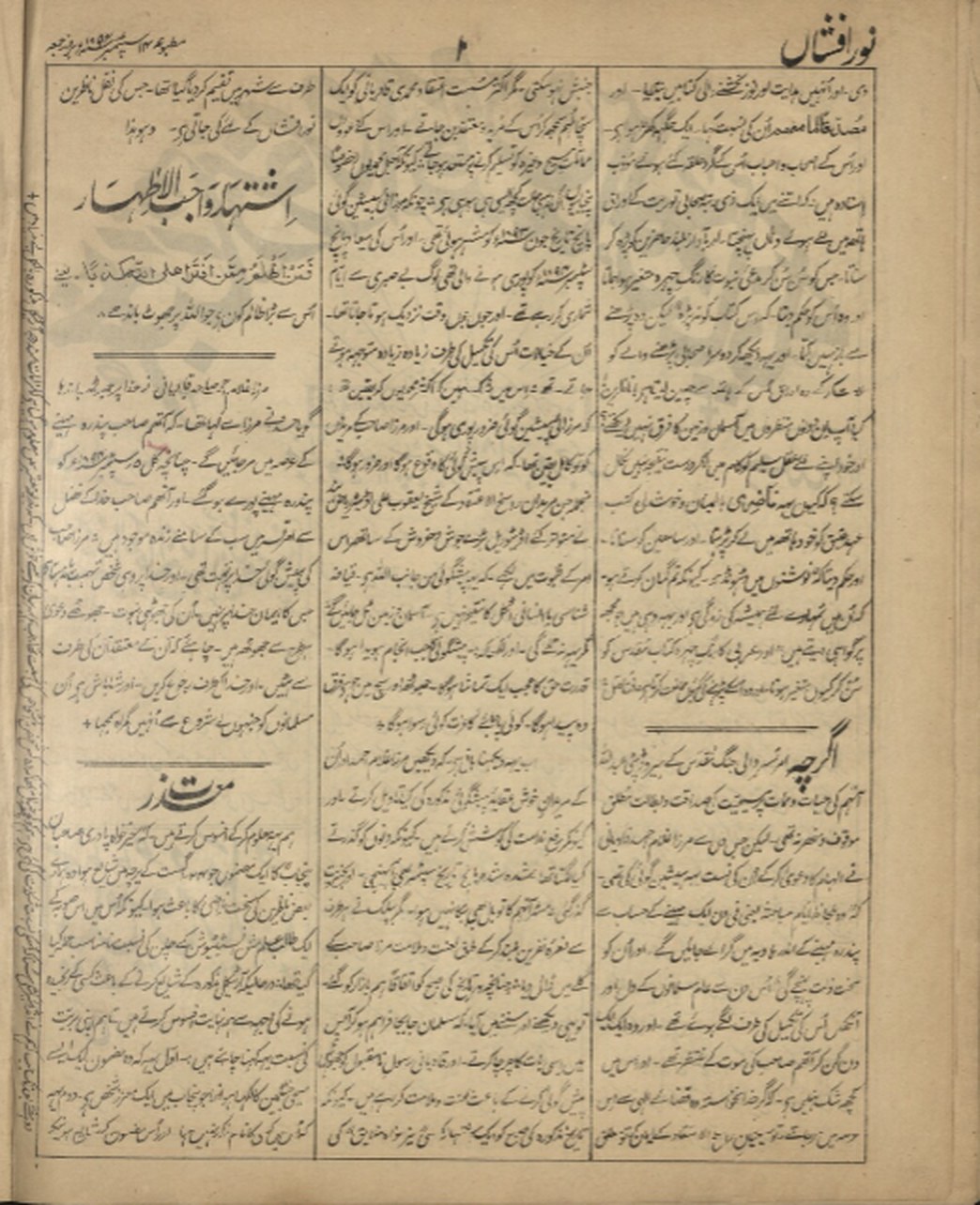
… پندرہ مہینے کے اندر ہاویہ میں گرائے جائیں گے۔ اور ان کو سخت ذلت پہنچے گی۔ اس دن سے عام مسلمانوں کے دل اور آنکھیں اس کی تکمیل کی طرف لگے ہوئے تھے
… within fifteen months they will be thrown into hawiya, and severe disgrace will reach them. From that day the hearts and eyes of ordinary Muslims were fixed on its fulfilment.
The quotation stops at “severe disgrace.” The words that follow in the original, “provided he does not turn to the truth,” are gone. On the same page the paper reprints an announcement handed out in the city the day after the deadline, which goes further and turns the prophecy into a plain date of death:
آتھم صاحب پندرہ مہینے کے عرصہ میں مر جائیں گے۔ چنانچہ کل ۵ ستمبر ۱۸۹۴ء کو پندرہ مہینے پورے ہو گئے اور آتھم صاحب خدا کے فضل سے امرتسر میں سب کے سامنے زندہ موجود ہیں
“Atham sahib will die within fifteen months.” So yesterday, 5 September 1894, the fifteen months were completed, and by God's grace Atham sahib is alive in Amritsar in front of everyone.
This is the version ordinary Muslims were handed. The same editorial describes the bazaar that morning, and gives the reason itself:
مسلمان جابجا فراہم ہو کر آپس میں اسی بات کا چرچا کرتے اور … جھوٹی پیشگوئی کرنے کے باعث لعنت و ملامت کر رہے ہیں۔ کیونکہ تاریخ مذکورہ کی صبح کو ایک اشتہار … شہر میں تقسیم کیا گیا تھا
Muslims had gathered here and there, talking about this and cursing him for making a false prophecy, because on the morning of that date an announcement had been handed out in the city.
So many of the Muslims who cursed him that day were reacting to a prophecy with its condition cut out. They were not told what he had actually said. The clerics who joined the Christians were another matter: they had the original words in front of them (read that answer).
And the story grew as it was retold. Besides cutting out the condition, Atham's supporters:
- celebrated in the streets. They “seated Atham in a carriage and paraded him through the bazaars” of Amritsar (Anjam-e-Atham, p. 23, footnote);
- explained away his fear with stories of attacks: a snake, men with spears, men with guns, poison. None was ever reported to the police or taken to court (see his profile), yet two years later, after Atham's death, the Christian paper Kashf-ul-Haqaiq was still accusing Hadhrat Mirza Ghulam Ahmad (as) of trying to poison him (Anjam-e-Atham, p. 16).
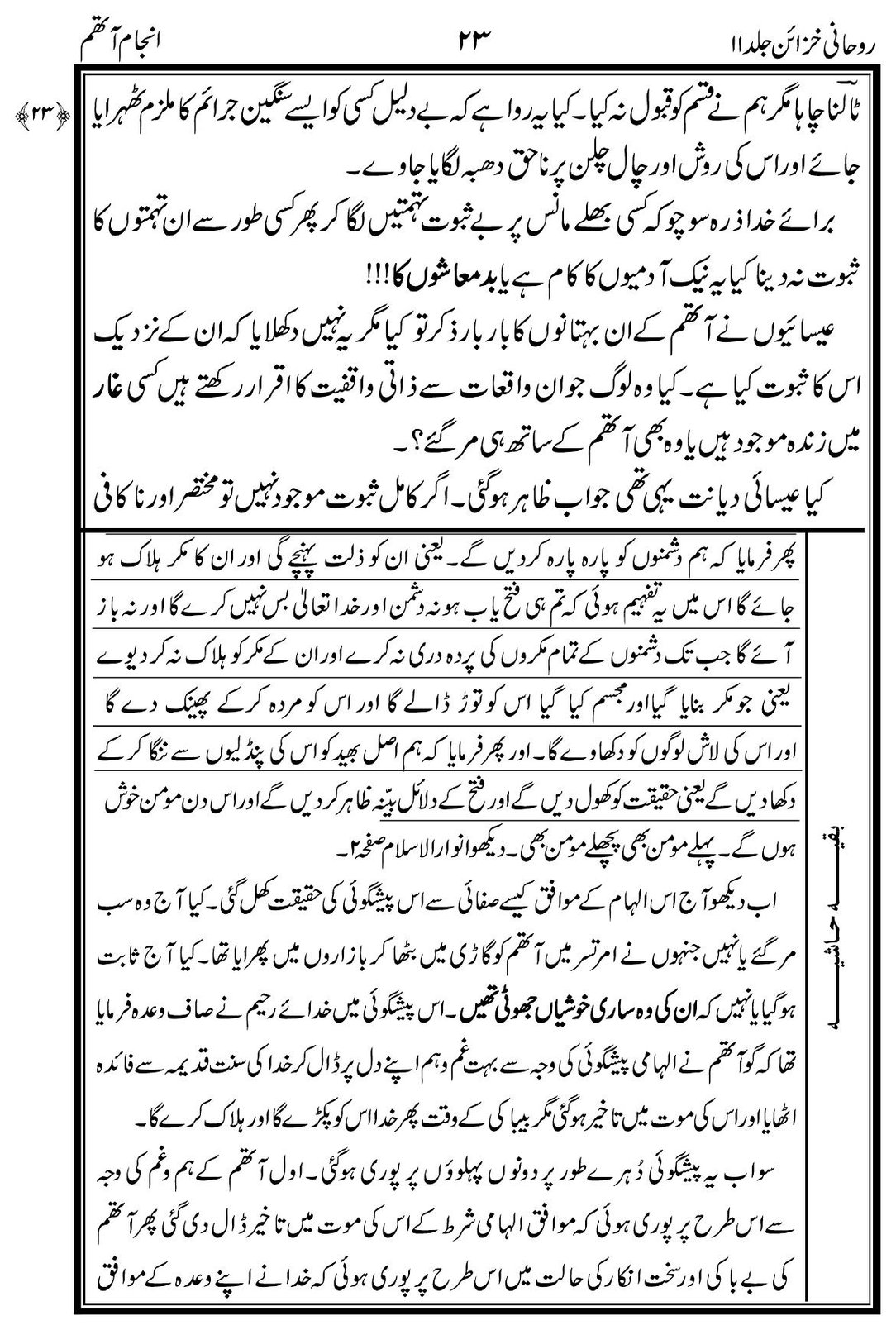
جنہوں نے امرتسر میں آتھم کو گاڑی میں بٹھا کر بازاروں میں پھرایا تھا۔ کیا آج ثابت ہو گیا یا نہیں کہ ان کی وہ ساری خوشیاں جھوٹی تھیں۔
… those who seated Atham in a carriage in Amritsar and paraded him through the bazaars. Has it not been proved today that all their rejoicing was false?
He had said before Atham died that death would still come. After Atham's death he opened Anjam-e-Atham by reminding the public what he had already published in Anwar-ul-Islam:
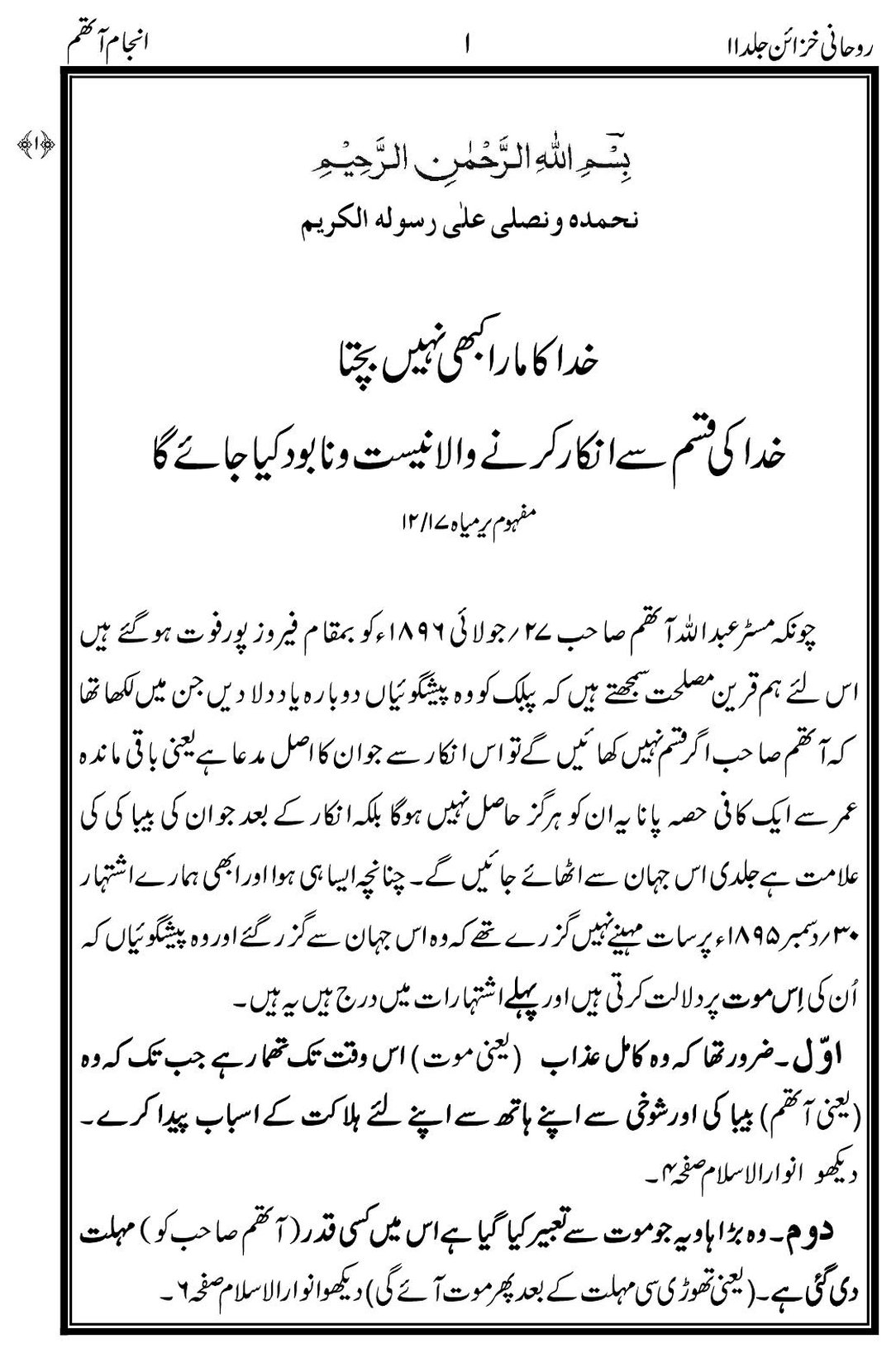
دوم۔ وہ بڑا ہاویہ جو موت سے تعبیر کیا گیا ہے اس میں کسی قدر (آتھم صاحب کو) مہلت دی گئی ہے۔ (یعنی تھوڑی سی مہلت کے بعد پھر موت آئے گی) دیکھو انوار الاسلام صفحہ ۶۔
Second: that great hawiya which was described as death: in it, some respite has been given (to Atham), that is, after a little respite death will come after all. See Anwar-ul-Islam, p. 6.
Putting it together:
- Hawiya is the whole punishment: a fall into ruin, with fear, distress and disgrace.
- Death is the biggest part of that hawiya.
- Atham received the first part: fifteen months of terror, wandering from city to city, silent against Islam.
- Because he turned in fear, the condition held back the biggest part, death. It was put off, not cancelled, just as the punishment of Jonah's people was lifted when they turned (10:98).
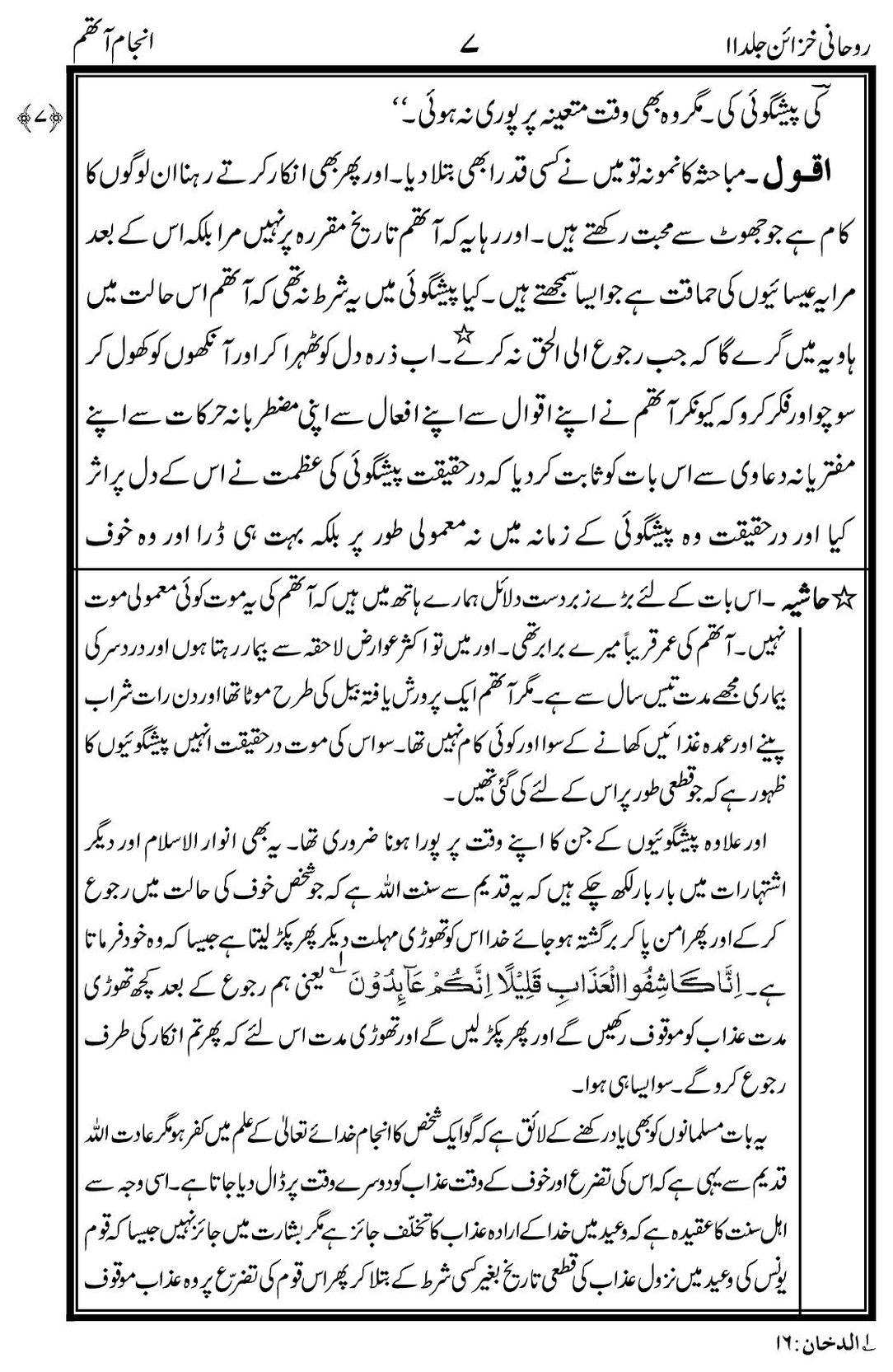
کیا پیشگوئی میں یہ شرط نہ تھی کہ آتھم اس حالت میں ہاویہ میں گرے گا کہ جب رجوع الی الحق نہ کرے۔
Was it not a condition of the prophecy that Atham would fall into hawiya only if he did not turn to the truth?
In a footnote on the same page he gives the Quranic rule behind it:
یہ قدیم سے سنت اللہ ہے کہ جو شخص خوف کی حالت میں رجوع کر کے اور پھر امن پا کر برگشتہ ہو جائے خدا اس کو تھوڑی مہلت دے کر پھر پکڑ لیتا ہے جیسا کہ وہ خود فرماتا ہے۔ اِنَّا کَاشِفُوا الْعَذَابِ قَلِیْلًا اِنَّکُمْ عَآئِدُوْنَ … سو ایسا ہی ہوا۔
It has been God's way from of old that when someone turns back in a state of fear, and then, once he feels safe, turns away again, God gives him a little respite and then seizes him, as He Himself says … And that is exactly what happened.
إِنَّا كَاشِفُو الْعَذَابِ قَلِيلًا ۚ إِنَّكُمْ عَائِدُونَ
We shall remove the punishment for a little while, but you will surely go back.
6. The test he would not take
If Atham had not turned, there was a simple way to prove it. Hadhrat Mirza Ghulam Ahmad (as) challenged him again and again to swear publicly that he had never been afraid and had never turned towards Islam, and offered him a reward for it. He listed the challenges himself:
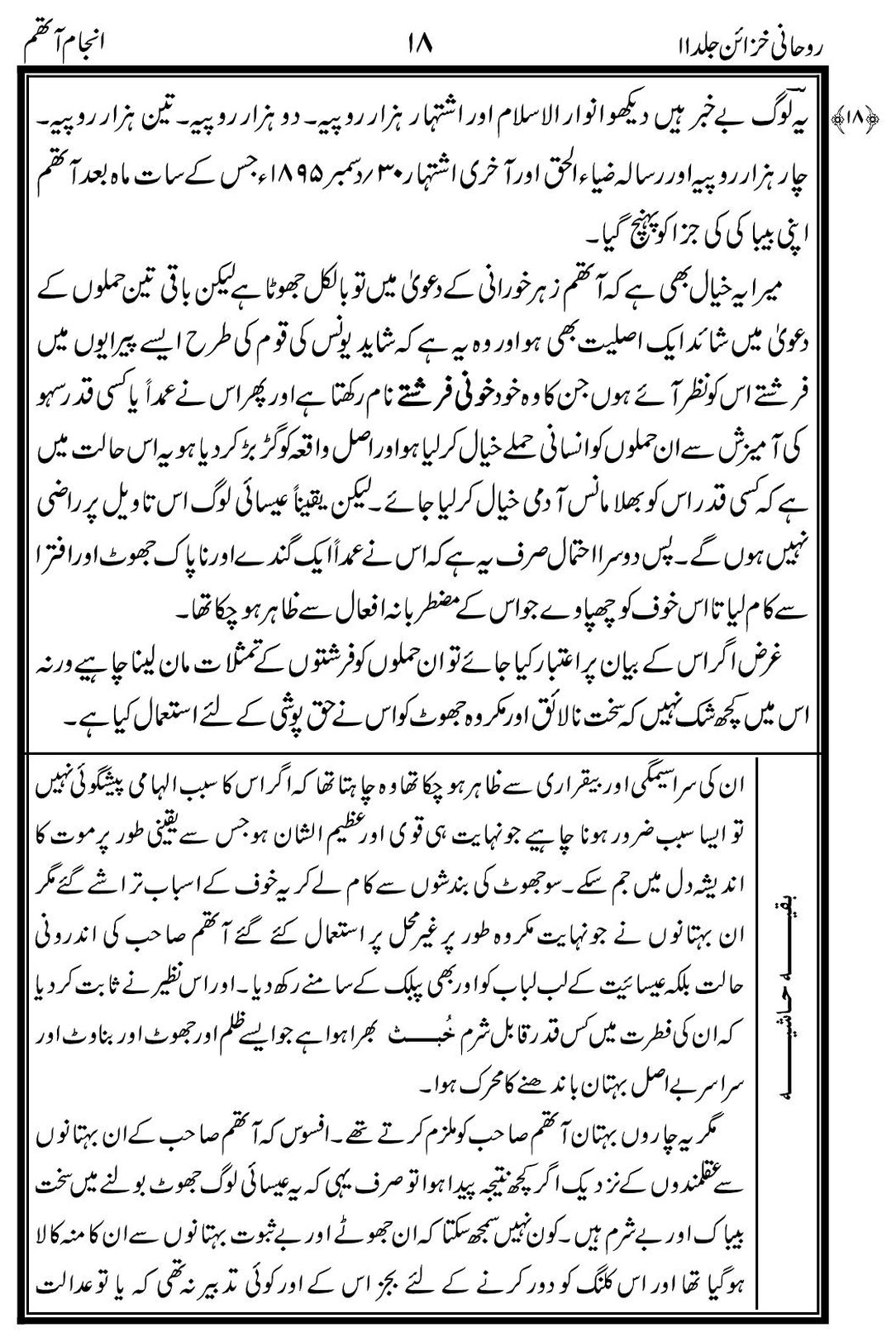
دیکھو انوار الاسلام اور اشتہار ہزار روپیہ۔ دو ہزار روپیہ۔ تین ہزار روپیہ۔ چار ہزار روپیہ اور رسالہ ضیاء الحق اور آخری اشتہار ۳۰ دسمبر ۱۸۹۵ء جس کے سات ماہ بعد آتھم اپنی بیباکی کی جزا کو پہنچ گیا۔
See Anwar-ul-Islam, and the announcements of a thousand rupees, two thousand rupees, three thousand rupees, four thousand rupees, and the book Zia-ul-Haq, and the last announcement of 30 December 1895, seven months after which Atham reached the reward of his boldness.
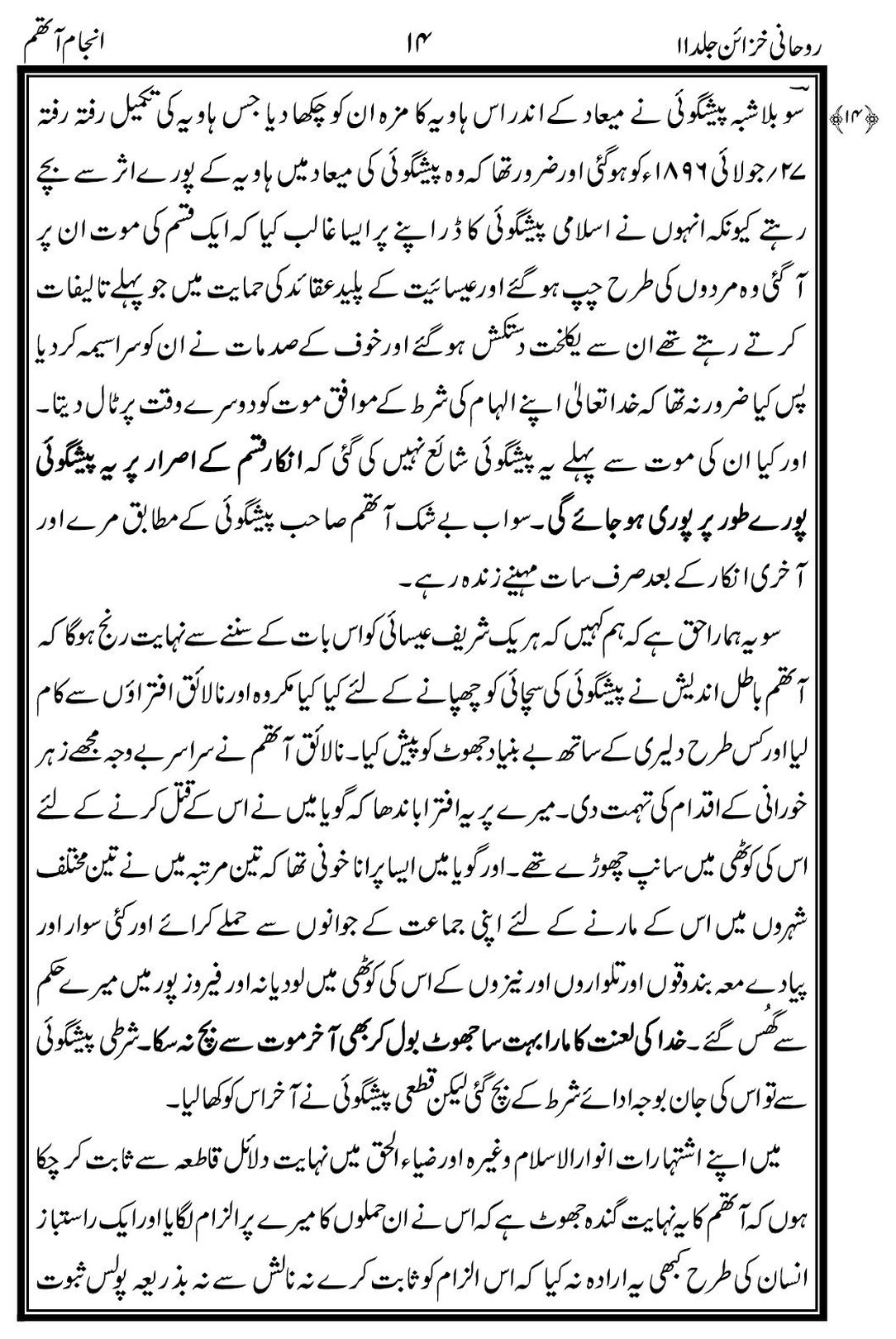
A man with nothing to hide would have taken the money. Atham never took the oath. He died in Ferozepur on 27 July 1896, before seven months had passed since that last announcement (p. 1). Hadhrat Mirza Ghulam Ahmad (as) summed up the whole prophecy like this:
سو بلاشبہ پیشگوئی نے میعاد کے اندر اس ہاویہ کا مزہ ان کو چکھا دیا جس ہاویہ کی تکمیل رفتہ رفتہ ۲۷ جولائی ۱۸۹۶ء کو ہوگئی … شرطی پیشگوئی سے تو اس کی جان بوجہ ادائے شرط کے بچ گئی لیکن قطعی پیشگوئی نے آخر اس کو کھا لیا۔
So without doubt, within the term, the prophecy made him taste that hawiya, whose completion came step by step on 27 July 1896 … The conditional prophecy spared his life, because he met its condition; but the definite prophecy consumed him in the end.
7. The challenge stayed open
Even after Atham's death, he offered any Christian who still doubted the chance to take Atham's place:
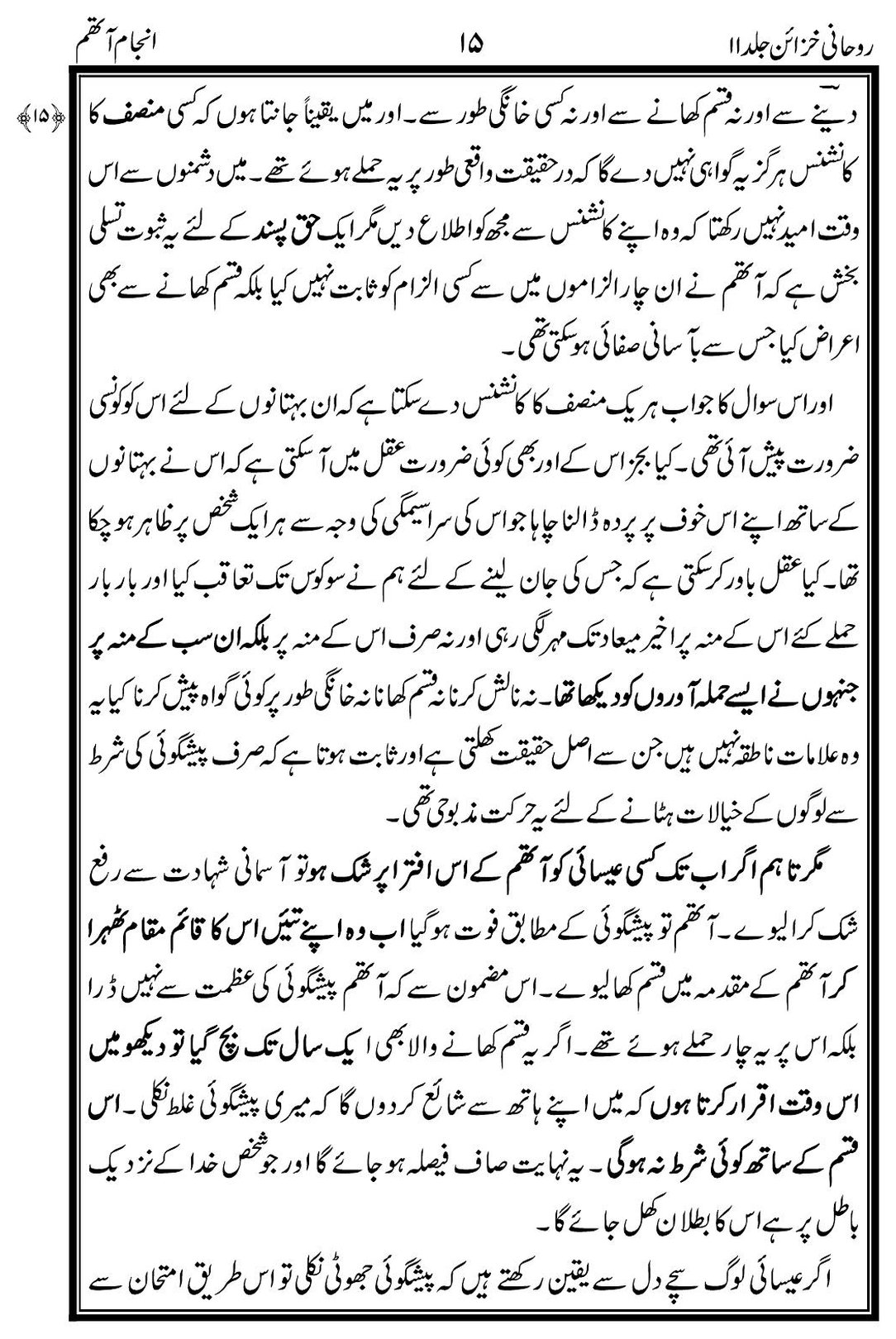
آتھم تو پیشگوئی کے مطابق فوت ہو گیا اب وہ اپنے تئیں اس کا قائم مقام ٹھہرا کر آتھم کے مقدمہ میں قسم کھا لیوے … اگر یہ قسم کھانے والا بھی ایک سال تک بچ گیا تو دیکھو میں اس وقت اقرار کرتا ہوں کہ میں اپنے ہاتھ سے شائع کر دوں گا کہ میری پیشگوئی غلط نکلی۔ اس قسم کے ساتھ کوئی شرط نہ ہوگی۔
Atham has died according to the prophecy. Now let him make himself Atham's stand-in and take the oath in Atham's case … If the one who takes this oath survives a year, then see: I declare at this moment that I will publish with my own hand that my prophecy was wrong. There will be no condition with this oath.
Quran references use the standard numbering. In editions that count the Bismillah as the first verse, add one (10:98 is 10:99).
Sources
- Jang-e-Muqaddas (Ruhani Khazain, Vol. 6), pp. 291–293
- Anwar-ul-Islam (Ruhani Khazain, Vol. 9), pp. 18, 30–38
- Anjam-e-Atham (Ruhani Khazain, Vol. 11), pp. 1, 7, 14, 15, 16, 18, 23
- Nur Afshan (Ludhiana), 14 September 1894, No. 37, Vol. 22, p. 2
- Sanaullah Amritsari, Ilhamat-e-Mirza, 2nd ed., p. 14
- The Holy Quran, 10:98, 44:15, 101:9
- Ahmadi Answers: Abdullah Atham